From modular business computing and glasses-free 3D to foldable gaming and system-level AI, Lenovo advances Smarter AI for All
At Mobile World Congress 2026 (MWC® 2026), Lenovo unveiled a bold new lineup of adaptive AI devices and forward-looking concepts aimed at business professionals, creators, students, and gamers. The showcase highlights a new era of personal computing defined by intelligent systems that adapt seamlessly to users and their environments.
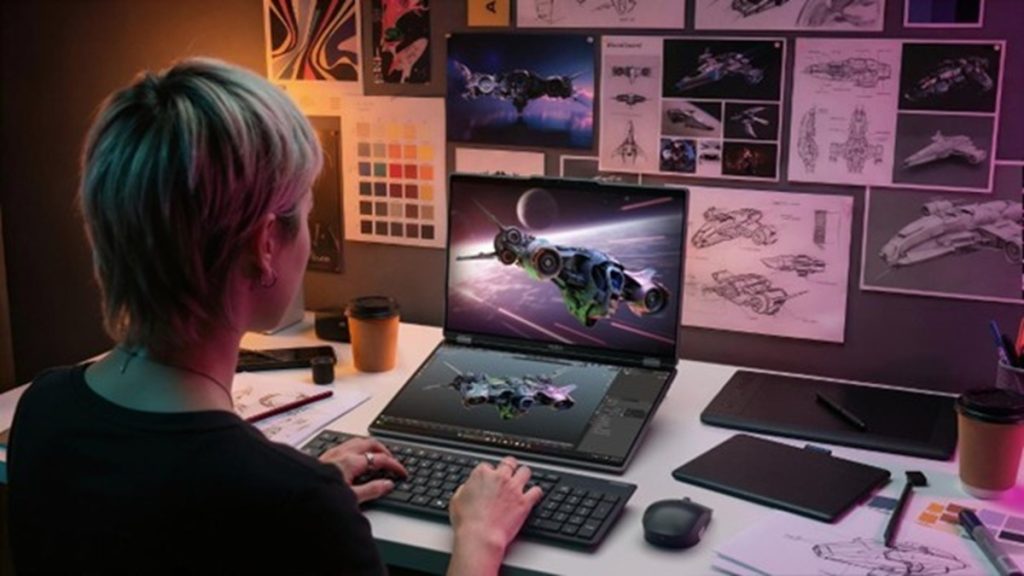
Leading the announcements are a modular PC architecture, a glasses-free 3D laptop concept, and a foldable gaming handheld, alongside the initial rollout of Lenovo Qira, the company’s new personal ambient intelligence platform. Together, these innovations signal Lenovo’s vision for a unified AI ecosystem where devices work together naturally to deliver personalized, proactive, and secure experiences.
A Unified AI Ecosystem
“The AI era will not be defined by a single device or application, but by intelligent systems that work seamlessly across everything we use,” said Luca Rossi, President of Lenovo’s Intelligent Devices Group.
He emphasized that Lenovo and Motorola are working toward a unified AI ecosystem spanning PCs, smartphones, tablets, and wearables. Through integrated hardware innovation and system-level AI, Lenovo aims to create a computing experience that feels intuitive and connected across every device people rely on daily.
Lenovo Qira: Personal Ambient Intelligence
At the center of Lenovo’s AI strategy is Lenovo Qira, a system-level AI platform embedded directly into Lenovo and Motorola devices. Unlike standalone AI assistants, Qira operates seamlessly across supported PCs, tablets, smartphones, and wearables, helping maintain continuity between tasks while anticipating user intent.
In the coming weeks, Lenovo Qira will roll out to more than 20 Lenovo PC models, including devices from the Lenovo Yoga, Lenovo IdeaPad, Lenovo Legion, and Lenovo ThinkPad families through over-the-air updates and pre-installed software.
The first tablet to feature the experience will be the Idea Tab Pro Gen 2, marking the beginning of Lenovo’s AI-enabled tablet ecosystem. Initial rollout will support six languages across nine regions, including English, Spanish, French, Italian, German, and Portuguese.
Lenovo plans to further expand Qira in 2026 with support for additional languages, devices, and Motorola smartphones, strengthening a unified AI experience across the Lenovo ecosystem.
Breakthrough Concepts: Exploring the Future of Computing
ThinkBook Modular AI PC Concept
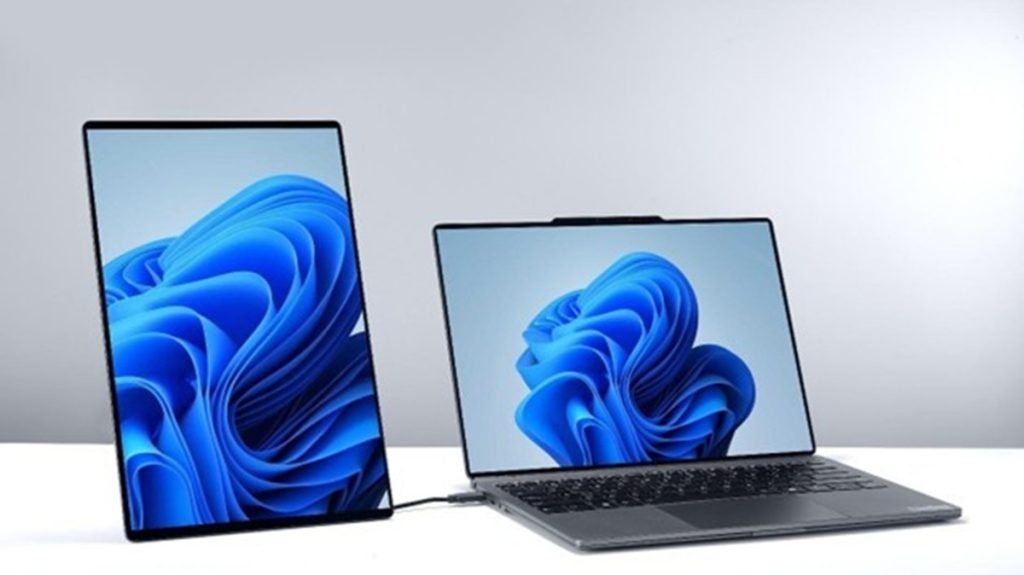
Lenovo also revealed the ThinkBook Modular AI PC Concept, a new approach to business computing built around the idea of “carry small, use big.”
The concept features a 14-inch ultra-thin base system with interchangeable components, including modular displays, detachable input devices, and flexible I/O modules. A secondary display can attach in multiple orientations—or even replace the keyboard—expanding the workspace to nearly 19 inches while maintaining portability.
This modular architecture demonstrates how AI-ready systems could adapt to evolving workflows while extending device lifecycles.
Yoga Book Pro 3D Concept
Another highlight is the Yoga Book Pro 3D Concept, a glasses-free 3D laptop designed to transform digital creativity.
By combining dual displays, AI-powered 2D-to-3D conversion, and gesture-based controls, the concept enables creators to view and manipulate depth directly on the screen. The design reflects Lenovo’s growing exploration of spatial computing and immersive content creation.
Legion Go Fold Concept
For gamers, Lenovo introduced the Legion Go Fold Concept, a foldable gaming handheld device that adapts to multiple play styles.
The device transforms from a compact handheld console into a larger immersive display and supports various modes, including handheld gaming, split-screen multitasking, expanded-display gameplay, and desktop-style interaction. The concept illustrates how flexible display technology could merge gaming, productivity, and entertainment in a single portable device.

Commercial Portfolio: AI-Ready Devices for Work
Lenovo also expanded its commercial lineup with updated ThinkPad T-Series laptops designed for organizations adopting AI-enabled workflows. Select models feature improved serviceability and industry-leading iFixit repairability scores, reinforcing Lenovo’s commitment to sustainability and lifecycle value.
Other business-focused devices include:
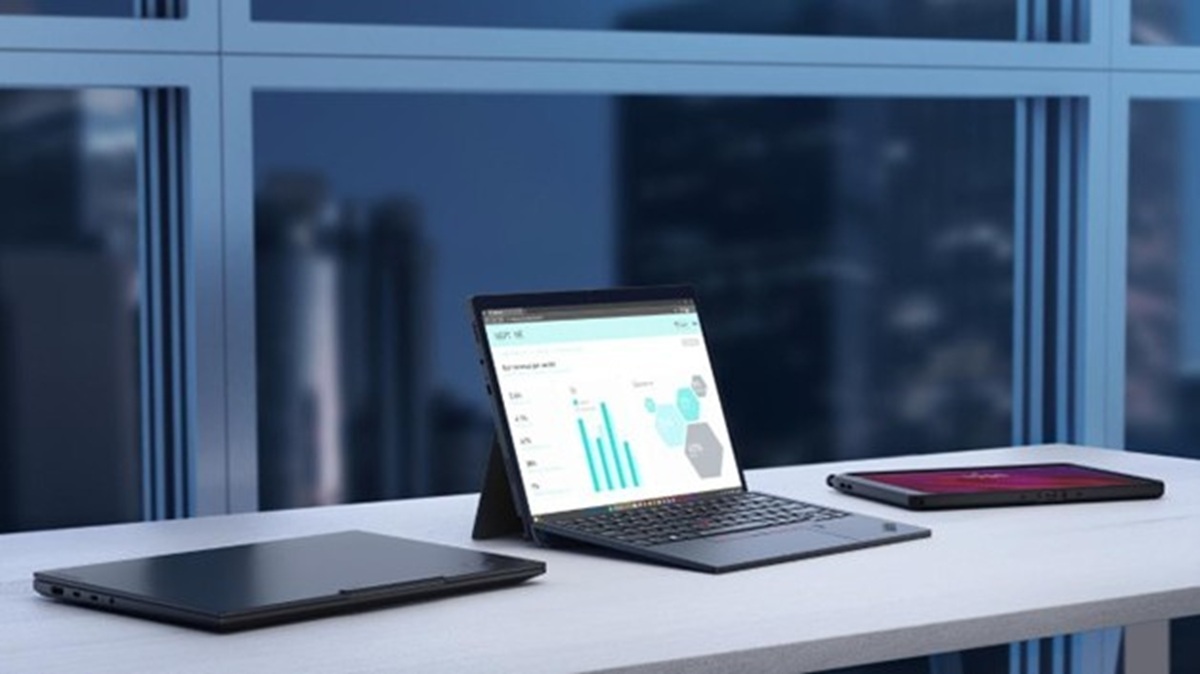
- ThinkPad X13 Detachable – a lightweight detachable PC with integrated pen support and field-replaceable components, ideal for frontline and hybrid workers.
- ThinkTab X11 – a rugged Android tablet built for demanding industrial and field environments.
- ThinkBook 14 2-in-1 Gen 6 – a versatile laptop for small and medium-sized businesses with AI-powered collaboration tools.
- ThinkVision M16 – a portable monitor designed to expand workspace flexibility.
Consumer and Gaming Devices
For everyday users, creators, and gamers, Lenovo introduced new AI-powered devices designed to combine performance with intelligent features.
The Yoga 9i 2-in-1 Aura Edition delivers a premium convertible experience with OLED visuals and AI-enhanced creative tools. Meanwhile, the Yoga Pro 7a and IdeaPad Slim 5i Ultra offer a balance of power and portability for productivity and content creation.
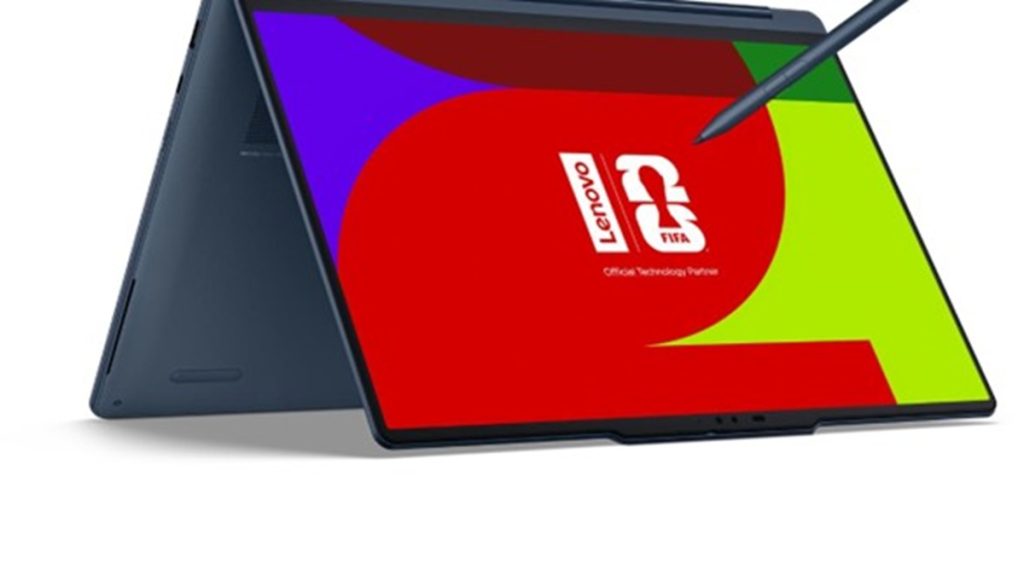
Lenovo’s gaming lineup also expands with the Legion 7a gaming laptop and the Legion Tab, a compact gaming tablet featuring a 3K display and advanced cooling technology for high-performance gameplay.
Building the Future of Intelligent Computing
Through its latest innovations at MWC 2026, Lenovo is demonstrating how AI can transform personal computing into a more connected and adaptive experience. By pairing experimental hardware concepts with the rollout of Lenovo Qira, the company aims to democratize AI and create systems that naturally adapt to users’ needs.
As Lenovo continues expanding its ecosystem across devices, platforms, and form factors, the company is positioning itself at the forefront of an AI-powered future where technology works seamlessly in the background—so people can focus on what matters most.