Tracing the Linguistic Roots
On November 18, 2026, at 6:00 PM, Instituto Cervantes de Manila will present a special webinar titled “Nebrija: el imperio de las lenguas” (Nebrija: The Empire of Languages). The online lecture will feature acclaimed Spanish literary scholar Darío Villanueva, who will delve into the profound and enduring legacy of humanist and grammarian Elio Antonio de Nebrija, particularly his foundational influence on the study and codification of Philippine languages.
A Blueprint for Modern Grammar
Nebrija achieved historic prominence with the 1492 publication of his Gramática de la lengua castellana (Grammar of the Castilian Language). As the very first comprehensive grammar book dedicated to a modern European vernacular language, his groundbreaking work served as a universal structural blueprint. Its analytical approach eventually reached far beyond Spain, deeply shaping linguistic scholarship across the Americas and Asia.
The upcoming webinar highlights Nebrija’s position as a cornerstone figure in the global history of grammatical documentation. His academic methodologies heavily influenced the Spanish scholars, missionaries, and religious chroniclers who arrived in the Philippines. These pioneers utilized Nebrija’s existing grammatical categories and systematic frameworks to analyze, record, and preserve local native languages.
Shaping Philippine Linguistic History
Several historic Philippine publications directly highlight Nebrija’s analytical framework, including:
Tagalismo elucidado y reducido (en lo posible) a la latinidad de Nebrija (1742) by Franciscan friar Melchor de Oyanguren
Arte y reglas de la lengua tagala (1610) by Francisco Blancas de San José
Arte de la lengua iloca (1627) by Francisco López
Arte de la lengua bisaya de la provincia de Leyte (1663) by Domingo Ezguerra
- Tagalismo elucidado y reducido (en lo posible) a la latinidad de Nebrija (1742) by Franciscan friar Melchor de Oyanguren
Oyanguren’s work stands out as a clear example of applying European linguistic traditions directly to the structural study of Tagalog. Together, these centuries-old texts serve as historical proof of the deep connections linking early European grammatical scholarship with the formal documentation of Philippine languages.
Expert Insights from a Royal Academy Scholar
The upcoming lecture will be led by Darío Villanueva, a highly distinguished academic and Emeritus Professor of Literary Theory and Comparative Literature at the University of Santiago de Compostela. Notably, Villanueva is a member of the Royal Spanish Academy (RAE), having served as its director from 2015 to 2019. His illustrious career also includes leadership roles as rector of the University of Santiago de Compostela, president of the Instituto de España, and a member of the Council of State.
A prolific writer, Villanueva has authored more than 300 articles addressing literary theory, criticism, comparative literature, linguistic pragmatics, and the intersection of language and society. His vast bibliography features influential works such as Teoría del realismo literario, Introducing Comparative Literature: New Trends and Applications (co-authored with César Domínguez and Haun Saussy), and El atropello a la razón. Over the years, he has been awarded honorary doctorates from 14 universities across three continents and holds affiliations with nine academies of the Spanish language.
A Complementary Showcase in Intramuros
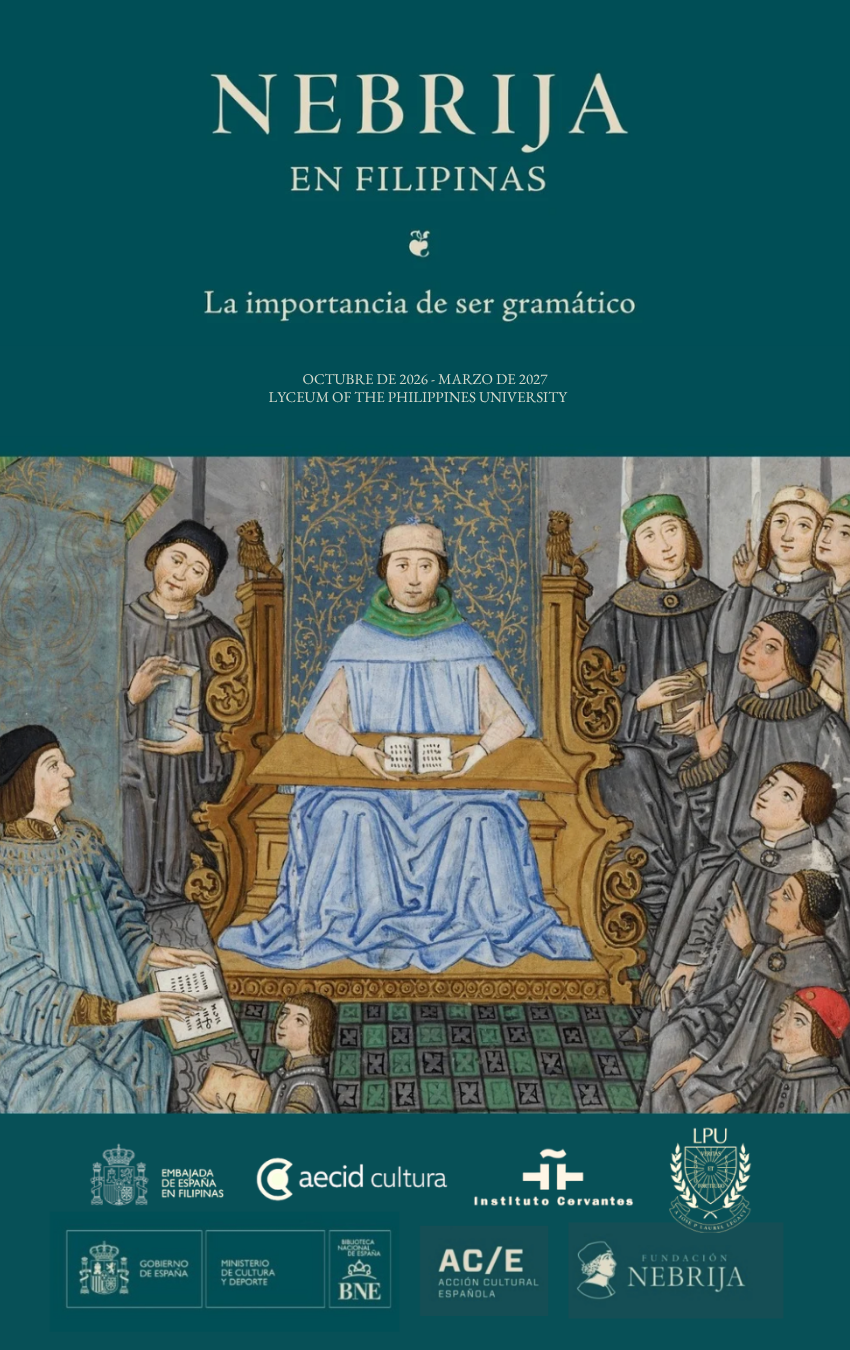
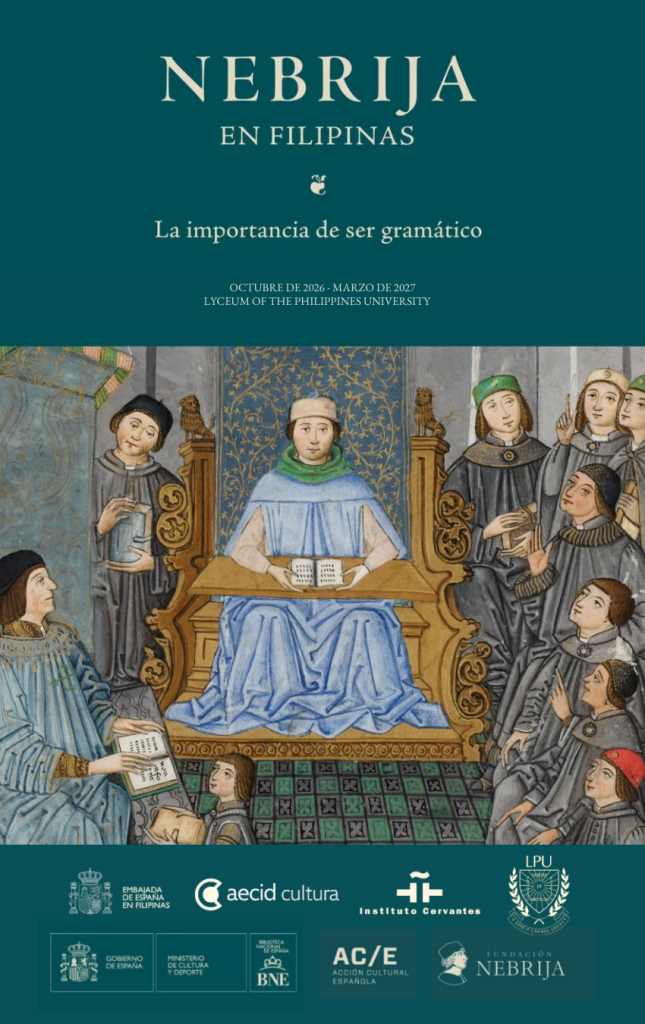
This webinar serves as a parallel event to the ongoing exhibition, “Nebrija en Filipinas: La importancia de ser gramático” (Nebrija in the Philippines: The Importance of Being a Grammarian). The physical showcase is presented by Instituto Cervantes de Manila in close partnership with the Lyceum of the Philippines University (LPU), the Embassy of Spain in the Philippines, Fundación Nebrija, and various other prominent Spanish and Philippine cultural organizations.
Open to the public from October 14, 2026, to February 5, 2027, on the LPU campus in Intramuros, Manila, the exhibition features a rich assortment of historical books, facsimiles, and informative displays. Together, these artifacts showcase how Nebrija’s analytical traditions directly shaped the earliest formal recordings of the country’s native languages.
Cultivating a Shared Cultural Bridge
Through Villanueva’s specialized presentation, the webinar will revisit Nebrija’s monumental contributions to linguistic thought while examining their deep historical impact on how global languages are documented and understood. The session provides a unique opportunity to reflect on the intricate cultural and linguistic exchanges that have historically linked Spain and the Philippines. Ultimately, the discussion will emphasize how the study of language and grammar continues to serve as an enduring, timeless bridge between nations.
Interested audience on the talk can register here: https://forms.cloud.microsoft/e/t3fCGfJMeJ
For more information about Instituto Cervantes de Manila’s events, visit manila.cervantes.es or follow Instituto Cervantes de Manila on Facebook.