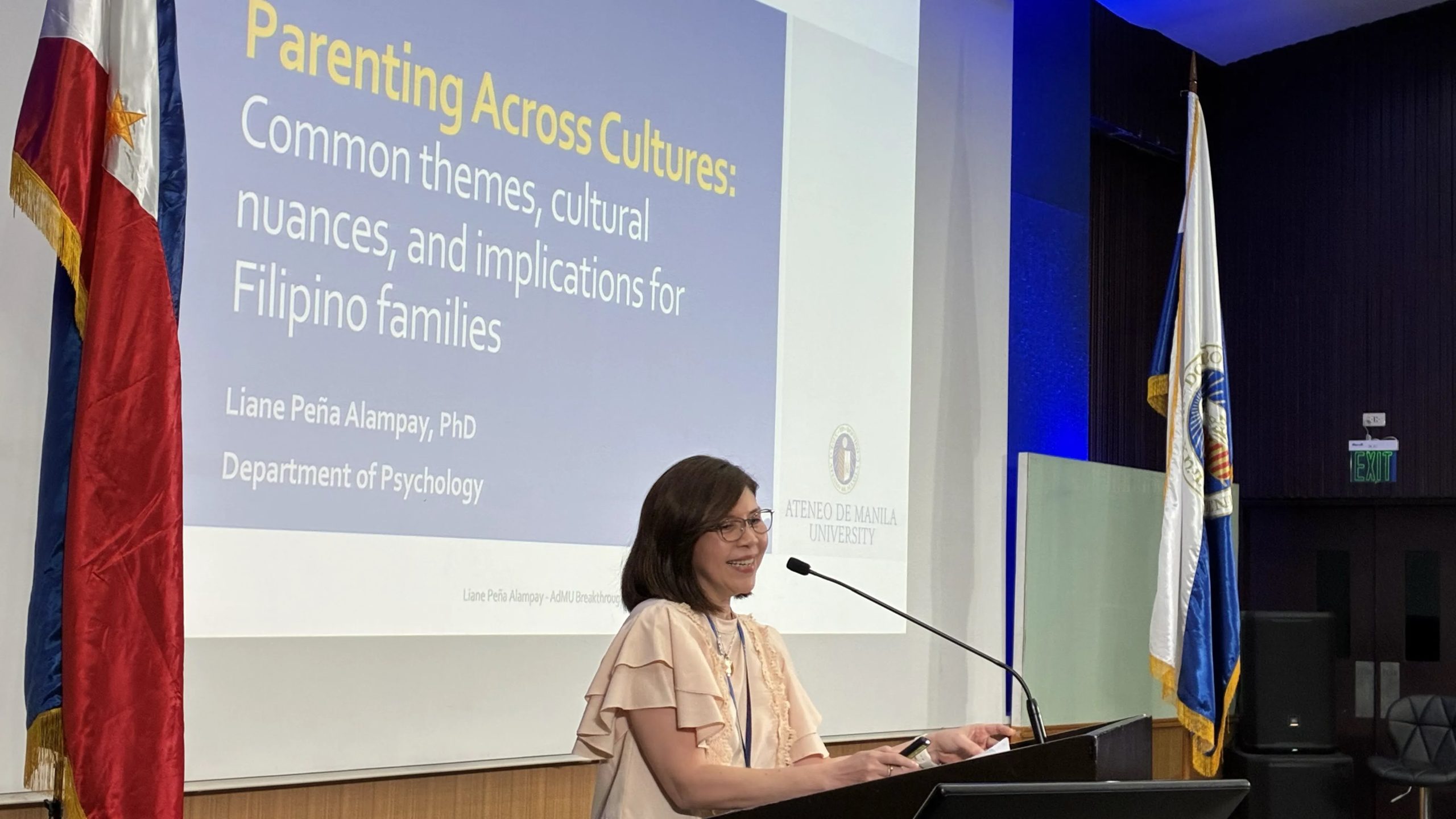
The age-old Filipino belief that “pamamalo” builds well-behaved children is being challenged by rigorous global science. According to international data shared by Dr. Liane Peña Alampay, a psychology professor at the Ateneo de Manila University, frequent spanking actually leads to higher rates of anxiety and aggression in kids over time.
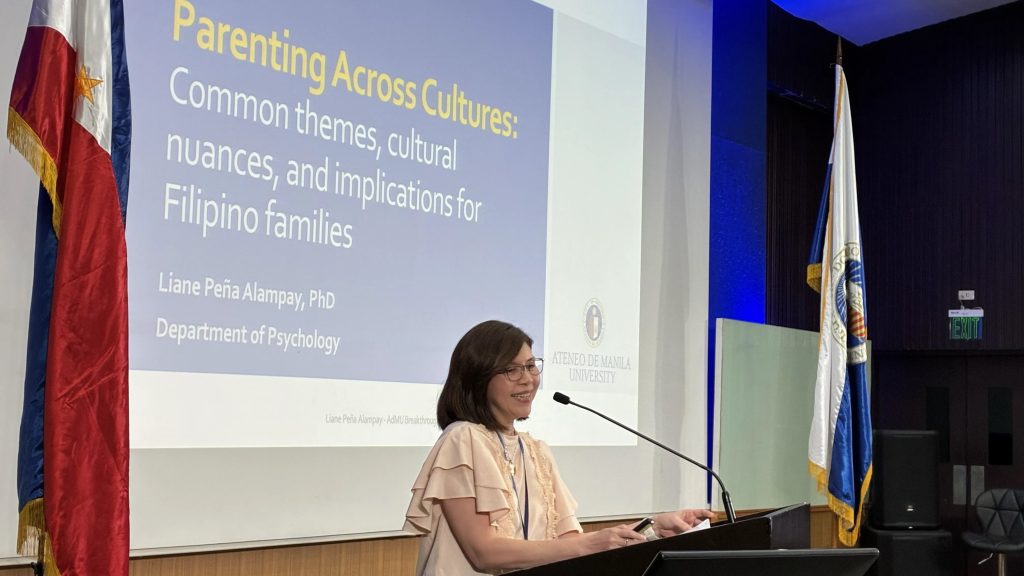
The real secret to raising well-adjusted children isn’t fear or physical punishment—it is clear household rules, healthy communication, and warm, loving environments.
Speaking at the Ateneo Breakthroughs Lecture, Dr. Alampay shared insights from the Parenting Across Cultures (PAC) study, the largest and longest-running international research project of its kind.
As the lead researcher for the Philippine arm of the project, she spent 15 years tracking how different cultural parenting styles shape a child’s development, analyzing data from 4,500 families spanning nine countries, including the US, China, Sweden, and the Philippines.
Nothing positive about corporal punishment
No matter where families lived, the PAC study found the exact same pattern: regular spanking always led to higher levels of anxiety and aggression in kids. Even in countries where physical discipline is a deeply rooted norm, widespread cultural acceptance only slightly cushioned the psychological blow—it never actually made hitting a helpful or positive parenting tool.
“In no instance does corporal punishment have positive effects,” Alampay said, underscoring the project’s findings.
“In the Philippine context, corporal punishment is often synonymous with discipline. But I want to correct that; there are many types and forms of discipline. We need to discipline our children, but in ways that are not harsh or inflicting pain,” she explained.
Dr. Alampay’s analysis fundamentally refutes the common misconception that an affectionate, validating parenting style is a uniquely Western philosophy incompatible with Filipino households. Data spanning all nine participating nations revealed that parental rejection, neglect, and overt hostility consistently predicted prolonged emotional and behavioral struggles in children from age seven through 14.
Conversely, children who experienced a strong sense of validation and acceptance developed a psychological buffer against depression, relationship anxiety, and antisocial or aggressive tendencies.
Furthermore, Dr. Alampay emphasized that mitigating institutional and school violence relies heavily on repairing a child’s foundational relationships at home and within the classroom. When punitive or exclusionary parenting at home intersects with peer bullying or social isolation at school, the resulting emotional distress can leave vulnerable youth highly susceptible to online radicalization spaces that promote violence.
“Of course, we need to make schools safe spaces, not just safe in terms of cameras and bag searches, but safe with a teacher, safe with classmates,” she said, calling for parenting support and environments where children feel accepted and can trust adults.
Authoritative vs. authoritarian parenting styles
The research revealed that Filipino participants exhibited some of the highest levels of authoritarian tendencies, heavily prioritizing rigid strictness, absolute obedience, and institutional respect. Dr. Alampay contrasted this rigid framework with authoritative parenting, an approach that balances structured behavioral rules with emotional warmth, two-way dialogue, and valid validation of the child’s perspective.
Interestingly, the deep-seated cultural value placed on family obligations—such as household cooperation, shared time, sibling support, and parental respect—consistently predicted pro-social, helpful behavior in older children. Among the Filipino demographic, these strong familial bonds acted as a psychological buffer, mitigating the damage of negative discipline by altering how children interpreted their parents’ actions.
While this protective variable shares common ground with the traditional concept of utang na loob, it is not completely identical, and further research is required to map out how family obligations can simultaneously trigger positive and negative psychological effects on youth.
Finally, the study noted that parenting dynamics are fundamentally vulnerable to systemic external stressors; financial insecurity, neighborhood dangers, and domestic instability heavily tax parental mental health, increasing the likelihood of reactive, harsh parenting.
Putting research into practice
To bridge the gap between academic research and real-world application, Dr. Alampay highlighted Masayang Pamilya (MaPa). This program is a localized version of the Parenting for Lifelong Health initiative, specifically designed to foster healthy guardian-child dynamics, mitigate domestic violence, and boost the overall welfare of both parents and children.
Through MaPa, parents learn everyday practical skills using conversational scripts, hands-on practice, visual stories, and helpful stress management tools. The program’s effectiveness is backed by a randomized controlled study, which proved that families using MaPa saw a lasting drop in child maltreatment that was still evident a year later.
Now, Dr. Alampay’s team is teaming up with the Department of Social Welfare and Development (DSWD) to bring MaPa to more homes by including it in family development sessions for conditional cash transfer beneficiaries. For Dr. Alampay, the golden rule of helping parents is simple: choose empathy and support over criticism. She firmly believes that most moms and dads don’t set out to be harsh or negative. They deeply want to see their kids succeed—they just need someone to show them how.
“We are also products of our history and how we were parented; it is all we know,” she added.
Encouragingly, parents show a strong willingness to unlearn old habits and adopt positive new practices when given the right guidance.
This insight was shared during Dr. Alampay’s presentation for the Ateneo Breakthroughs Lecture Series.
Centered on the family, the current series aims to bridge the gap between academic research at Ateneo de Manila University and public discourse regarding youth, relationships, and overall well-being.
View Dr. Liane Peña Alampay’s full Ateneo Breakthroughs Lecture, “Parenting Across Cultures: Universals, Cultural Nuances, and Implications for Filipino Families,” on YouTube here.
Find out more about the Parenting Across Cultures project by visiting here.