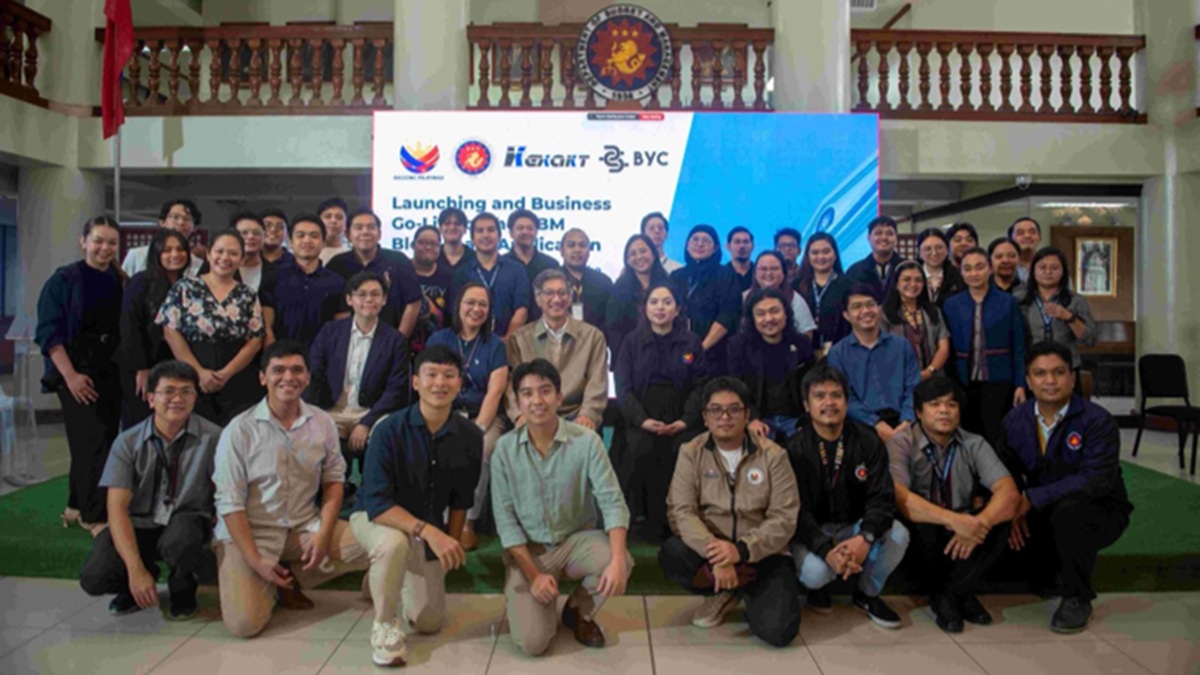
Tamper-proof budget docs powered by BayaniChain, ExakIT

The Department of Budget and Management (DBM) has officially integrated blockchain technology into the government budgeting process, marking a historic step toward transforming how public funds are tracked, secured, and managed.
“Blockchain is more than a buzzword—it’s a governance tool,” said DBM Undersecretary Goddes Hope ‘Sasa’ Libiran. “By leveraging this technology, we can ensure that every peso is accounted for, every transaction is transparent, and every citizen can trust how public funds are managed.”
A breakthrough in digital governance
For decades, governments worldwide have faced persistent challenges in maintaining efficiency, accuracy, and accountability in public financial systems. Blockchain—best known for powering cryptocurrencies—offers a game-changing solution by ensuring that all transactions are visible, verifiable, and tamper-proof.
Through cryptographic validation, blockchain strengthens data integrity and streamlines processes that once relied heavily on manual verification, enabling faster reconciliations and reduced bureaucratic bottlenecks.
The DBM’s initiative makes the Philippines one of the first countries in Asia to adopt blockchain for national financial management—a move that places it at the forefront of public sector innovation and could inspire other governments across the region to follow suit.
Launching the Philippines’ first blockchain-backed budget transparency portal
This quarter, the DBM unveiled blockchain.dbm.gov.ph, a first-of-its-kind budget transparency platform that records Special Allotment Release Orders (SAROs) and Notices of Cash Allocation (NCAs) as verifiable, on-chain entries.
Developed in partnership with BayaniChain and ExakIT Services, the portal enables anyone to verify budget documents in real time. Each entry is immutable and tamper-proof, ensuring that records cannot be altered while giving the public access to see how funds are authorized and released.
“Our mission is to equip government and businesses with tools that ensure security and reliability,” said BayaniChain CEO Paul Soliman. “By merging blockchain with advanced AI, we’re helping the DBM strengthen transparency, secure financial processes, and demonstrate how emerging technologies can protect institutional trust and deliver lasting value.”
How it works
The process begins with the DBM’s Action Document Releasing System (ADRS), which issues official budget documents. These are then encrypted and secured through BayaniChain’s Lumen Blockchain-as-a-Service platform, co-developed with ExakIT.
To maintain balance between transparency and privacy, the Prismo Protocol determines which information is made public and which remains confidential. Once verified, SAROs and NCAs are written to the Polygon blockchain as NFTs, making them immune to tampering, deepfakes, or document forgery.
Anyone can verify documents dating from 2024 onward by scanning the QR code on a SARO or NCA or by searching manually using document type, department, agency, and operating unit fields.
Beyond SAROs and NCAs: The vision of a fully transparent budget ecosystem
The DBM’s long-term vision extends far beyond digitizing documents. It aims to build a next-generation public finance ecosystem where the entire budget lifecycle—from planning and allocation to disbursement and auditing—is traceable on-chain.
Artificial Intelligence will play a key role in this transformation—enabling anomaly detection, budget forecasting, and policy insights—while citizen-facing dashboards will translate complex financial data into clear, actionable information for the public.
“We’re not just digitizing SAROs and NCAs,” Libiran explained. “We’re building a next-generation public finance system that merges blockchain transparency with AI-driven insights to allocate resources more efficiently and ensure accountability at every level.”
A model for digital trust and innovation
With blockchain-powered platforms set to expand across budgeting, procurement, and monitoring, several pilot programs are already underway. The goal: a trustless, decentralized, and citizen-first financial system that strengthens democratic governance through technology.
By embracing blockchain, the Philippines proves that governments can evolve with the times—bridging innovation and integrity—and emerge as a regional leader in digital trust, accountability, and public sector modernization.