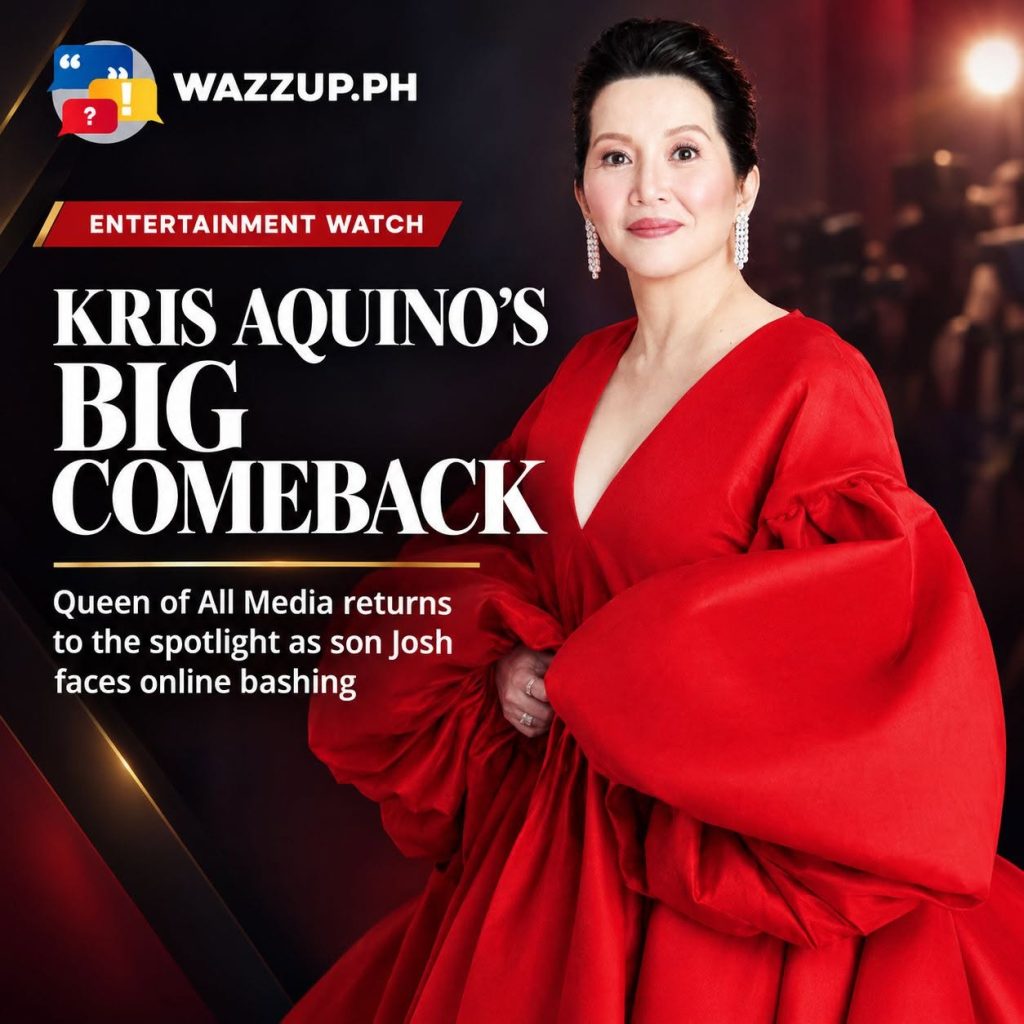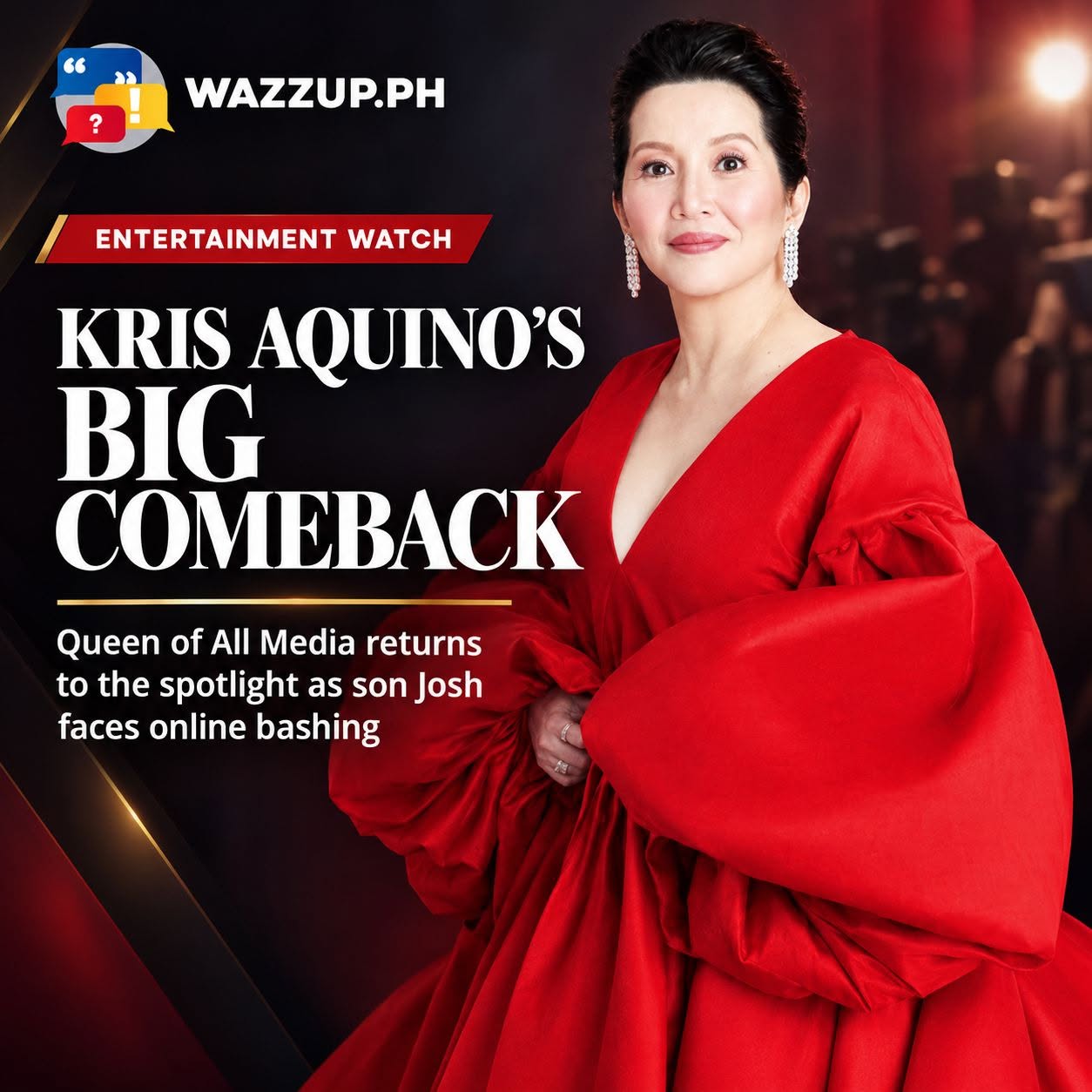
MANILA, Philippines — The Queen of All Media, Kris Aquino, is gradually returning to the public spotlight through new brand projects and entertainment campaigns, even as a controversy involving hurtful remarks about her eldest son, Joshua “Josh” Aquino, sparks a wider discussion about disability awareness, responsible content creation, and respect for human dignity.
For many fans, Kris’ renewed public presence is a welcome development after years of stepping back from regular showbiz engagements to focus on her health. However, alongside the excitement surrounding her professional comeback, the controversy involving Josh has raised questions about the boundaries of comedy and the responsibility of online personalities when discussing individuals and their families.
KRIS AQUINO RECONNECTS WITH THE ENTERTAINMENT INDUSTRY
Kris has recently drawn renewed public attention through several projects that signal a return to selected professional engagements.
In August 2026, Netflix Philippines featured the veteran television personality in a promotional campaign introducing her as its official Chief Head of Insights and Content Analysis, or C.H.I.K.A. The campaign played on her long-established reputation for candid commentary, celebrity interviews, and entertainment news.
Her appearance in the October 2026 issue of Tatler Philippines further renewed interest in her personal journey and enduring place in Philippine entertainment.
Kris has also been reported to have returned to commercial work, including a television commercial for Shopee Philippines. Her association with established brands has prompted fans to celebrate her renewed presence before the camera.
These projects represent a return to selected public-facing activities, although they do not necessarily indicate that she has resumed a regular television schedule.
For decades, Kris has been a prominent figure in Philippine television, known for her distinctive interviewing style, outspoken personality, and ability to connect with audiences. Her career has spanned talk shows, game shows, films, and numerous commercial endorsements.
Her latest appearances carry added significance because of her publicly documented health challenges. Kris has spoken about undergoing treatment for multiple autoimmune conditions, which have affected her ability to maintain her previous work commitments.
For her supporters, her renewed professional activity is an opportunity to see a familiar entertainment personality reconnect with the industry while continuing her personal health journey.
CONTROVERSIAL PODCAST REMARKS ABOUT JOSH AQUINO
While Kris’ return has generated excitement, her eldest son, Joshua “Josh” Aquino, became the subject of a separate controversy after remarks made during an episode of the comedy podcast Machong Chismisan circulated online.
During a discussion about Kris and her sons, Josh and Bimby, one of the hosts compared the two brothers, describing Bimby as a good son before referring to Josh as “walang kuwenta.”
Another remark suggested that Josh merely sat around doing nothing. Although one of the other hosts appeared to call out the statement as a “low blow,” the exchange continued with laughter, prompting criticism from viewers who found the comments degrading.
The episode was subsequently removed from the podcast’s channel, but clips continued to circulate on social media, extending the controversy beyond the original broadcast.
The remarks drew particular concern because Josh is on the autism spectrum. Critics argued that public discussions about his behavior and circumstances should not become an opportunity for humiliation or entertainment at his expense.
The incident also prompted a broader conversation about how persons with disabilities are represented in digital media and whether comedy crosses a line when it relies on personal attacks rather than humor directed at ideas, situations, or public issues.
APOLOGIES FOLLOW PUBLIC BACKLASH
The controversy intensified as netizens called for accountability from the podcast’s hosts and production team.
On October 14, 2026, host Makoy Pare publicly apologized and confirmed the removal of the episode. He acknowledged that the discussion included insensitive and hurtful remarks and expressed regret toward those who had been offended, including members of the persons with disabilities community.
Other individuals associated with the program also expressed regret over the exchange and their participation in it.
The Pod Network, which produces the podcast, likewise addressed the controversy and indicated that it would review its practices and strengthen safeguards for future content.
The Autism Society Philippines also condemned the remarks, adding to calls for greater awareness and sensitivity when discussing autism and the experiences of persons with disabilities.
The apologies marked an important development in the controversy, although rebuilding public trust will depend on whether the individuals and organization involved follow through on their commitments to greater responsibility.
As of the information reflected in the reports cited for this article, a public statement from Kris specifically addressing the podcast incident had not been established.
DISABILITY SHOULD NOT BE A PUNCHLINE
Beyond the personalities involved, the controversy raises an important question about the limits of comedy in an environment where a single remark can be recorded, shared, and amplified across digital platforms.
Comedy can challenge conventions, provoke discussion, and entertain audiences. However, the freedom to make jokes does not remove the responsibility to consider their potential impact, particularly when a person’s disability becomes the basis of ridicule.
A person’s diagnosis does not define their intelligence, character, capabilities, or worth. Nor should assumptions about a person’s circumstances be treated as established facts simply because they are repeated in a public discussion.
Criticism of public figures and their families is part of the media environment. But there is a meaningful distinction between discussing a public issue and humiliating an individual for circumstances that may be beyond their control.
The episode’s removal and the subsequent apologies are steps toward addressing the backlash. Their lasting significance, however, will depend on whether the experience leads to more thoughtful editorial decisions and more respectful conversations about disability.
TWO STORIES, ONE QUESTION OF PUBLIC RESPONSIBILITY
Kris Aquino’s renewed professional activity and the controversy involving Josh are separate developments, but both demonstrate how public attention can shape the experiences of people whose lives are frequently discussed in the media.
Kris’ return to selected entertainment projects highlights her continuing connection to an industry in which she has spent decades. The controversy involving Josh, meanwhile, underscores the importance of protecting human dignity even when a person becomes the subject of viral content.
The public can celebrate an entertainer’s professional milestones while also demanding accountability from content creators whose remarks cross the boundaries of respectful discourse.
Ultimately, a successful comeback is not measured solely by the number of appearances, campaigns, or headlines a celebrity generates. It also reflects the public’s continuing interest in the person behind the persona and the story beyond the spectacle.
Disability should not be a punchline. Respect should not depend on fame. Human dignity should never be optional.