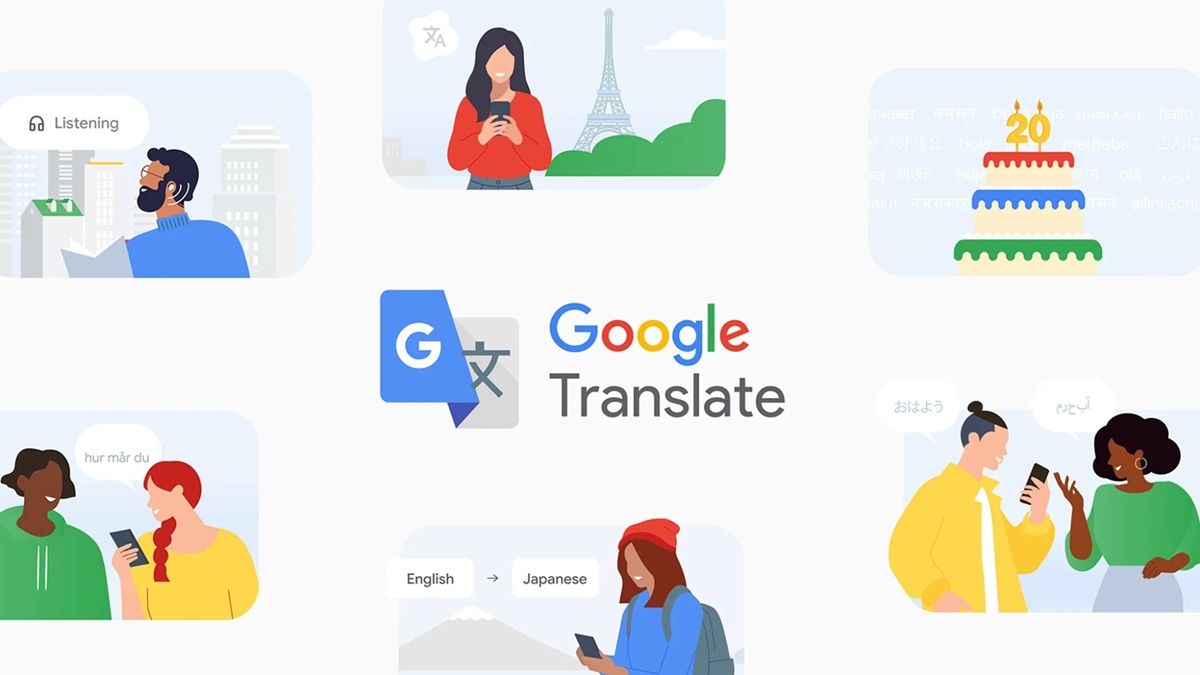
Two decades ago, Google launched what began as a simple experiment: to help people understand each other across languages. Today, that experiment has evolved into one of the world’s most widely used communication tools—transforming language from a barrier into a bridge for more than a billion users worldwide.

To mark its 20-year milestone, Google Translate stands as a testament to how far machine learning and human connection have come. What started with basic statistical models has grown into a powerful AI-driven system analyzing trillions of words each month, continuously reshaping how the world communicates.
Today, nearly 250 languages are supported—covering roughly 95% of the global population, including many endangered and indigenous languages. Every month, over 1 trillion words are translated, reflecting the scale of a platform deeply embedded in daily life.
Beyond translation, the experience has evolved into something more personal and interactive. Users now engage with pronunciation practice powered by AI, receiving instant feedback to improve real-world conversations. Meanwhile, Live Translate enables real-time, audio-to-audio conversations that preserve tone and nuance, creating more natural dialogue between speakers of different languages.
Powered by advanced models like Gemini, conversations are becoming more fluid and context-aware, with more than a third of Live Translate sessions lasting over five minutes—evidence of deeper, more meaningful exchanges.
Translation is also becoming a learning tool. Around one-third of mobile users rely on it to build language skills, while nearly half of “Practice” users focus on speaking confidence through interactive scenarios. Offline language packs continue to support travelers worldwide, with English, Spanish, and French among the most downloaded.
Visual tools have further expanded accessibility. Google Lens allows users to instantly translate menus and signs through their cameras, while Circle to Search has made translation one of its most popular features on Android devices.
Cultural and linguistic discovery is also evolving rapidly. While English-to-Spanish remains the most common translation pair, languages such as Indonesian and Bengali are seeing significant growth, reflecting shifting global connections. At the same time, AI is increasingly decoding modern slang, emojis, and even sign language, making communication more inclusive and expressive than ever before.
From live events to everyday conversations, language is no longer a limitation—it’s a shared space. And across it all, one phrase remains the most translated in the world: “Thank you.”
Twenty years on, Google Translate continues to stay true to its original mission: removing barriers so people everywhere can understand—and be understood.