When it comes to online safety, how would you rate your habits?
Are you someone who clicks on random links you receive via SMS or email? Do you reuse your MPIN or passwords across various platforms? Maybe you’ve logged into your financial apps from multiple devices? If you’ve answered “yes” to any of these questions, it’s time for a little refresher course on keeping your information secure.
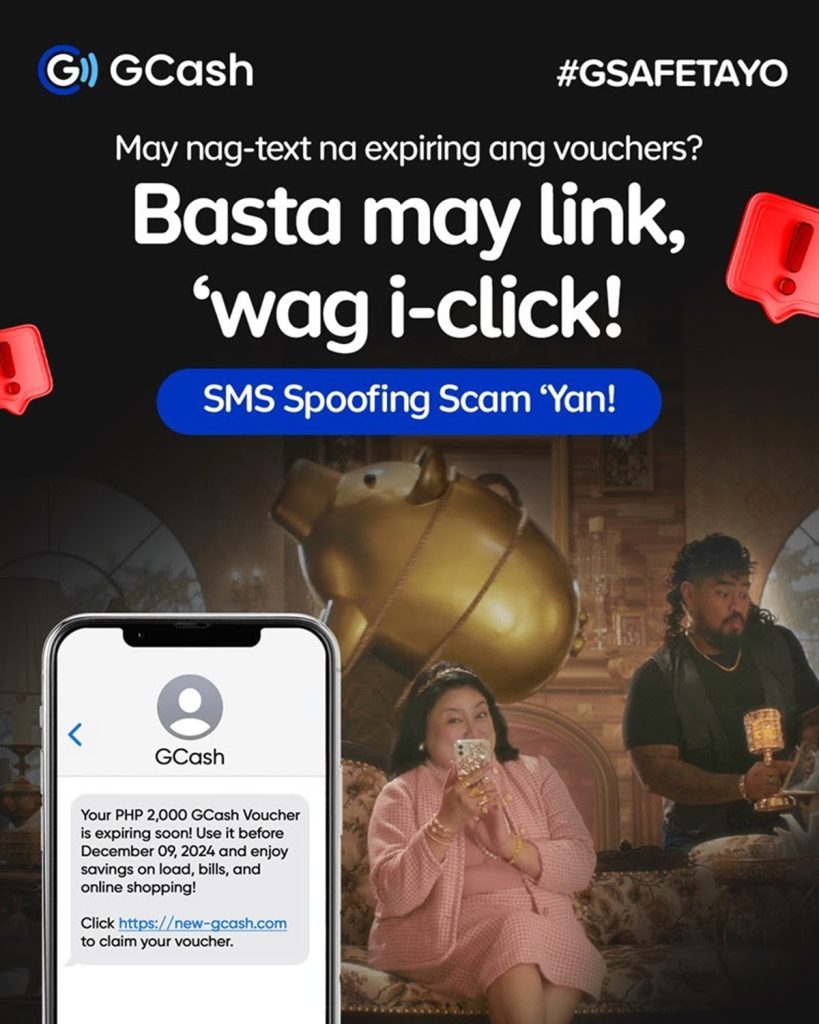
GCash, the country’s leading financial super app, is here to remind everyone about the simple yet powerful rule that can make all the difference in protecting your online accounts: “Basta may link, wag i-click! ” This is more than just a catchy phrase; it’s a core message of GCash’s ongoing anti-scam campaign, designed to help Filipinos recognize and fight back against SMS spoofing scams. These scams aim to steal personal data by preying on users’ unsuspecting behavior. By making this phrase a habit, we can all be a little bit safer online.
DID YOU KNOW?
SMS spoofing scams are constantly evolving and becoming more sophisticated. However, they still operate on the same basic tricks to lure people into clicking harmful links. These scams rely on psychological tactics and high-pressure situations that make you think you’re missing out on something big. Here are some of the most common tactics you should be aware of:
- Authority Exploitation: Scammers love impersonating trusted institutions, government officials, or agencies to instill a sense of urgency. You might receive a message that appears to come from the government, warning you about aid, grants, or urgent account updates. The goal? To get you to click on a link that could steal your personal information.
- Emotional Manipulation: Fraudsters often prey on your emotions, creating scenarios designed to provoke fear, excitement, or greed. They may create messages that capitalize on your fear of missing out (FOMO) or make promises of prizes or rewards. These tactics make it harder for you to think clearly, leading to decisions that could jeopardize your security.
- Urgency and Scarcity Pressures: Time-sensitive offers that sound “too good to be true” are another classic trick scammers use. You might get a message telling you that you need to act immediately to claim a prize or secure an opportunity that’s running out of time. These high-pressure tactics are meant to rush you into action without taking the time to verify the authenticity of the message.
PROTECT YOURSELF IN 3 EASY STEPS
Staying protected from scams doesn’t need to be complicated. GCash is here to make it easier for everyone to score high on their scam-safety report card with three simple steps for securing your online transactions:
- Update Your MPIN Regularly
Think of your MPIN as a password—except it’s even smarter. Change it regularly to ensure that even if a scammer gets access to your old one, they can’t use it to gain entry into your account. It’s an easy but effective way to keep your information safe. - Use Biometrics for Extra Security
Using your fingerprint or face recognition is one of the most secure ways to protect your account. Biometrics are unique to you, and scammers can’t replicate your fingerprint or face register. By enabling biometrics, you add an extra layer of security that’s difficult for anyone to bypass. - Activate “Account Secure.”
This feature ensures that your GCash account is accessible only on the registered mobile device linked to your account. It limits potential access to your account, even if someone tries to log in from another device. Most importantly, it reinforces your good habit of avoiding suspicious links by keeping your account safer, even if you’re not directly interacting with scammers.
While scams are becoming increasingly complex, staying secure has never been easier. By following these three straightforward steps, you can keep your online accounts protected and score a perfect grade on your #GSafeTayo Report Card.
Stay sharp, stay scam-free, and keep your information safe. For more tips and to learn more about protecting your account, head over to www.new.gcash.com. Stay safe online—because your security is just as important as your convenience.