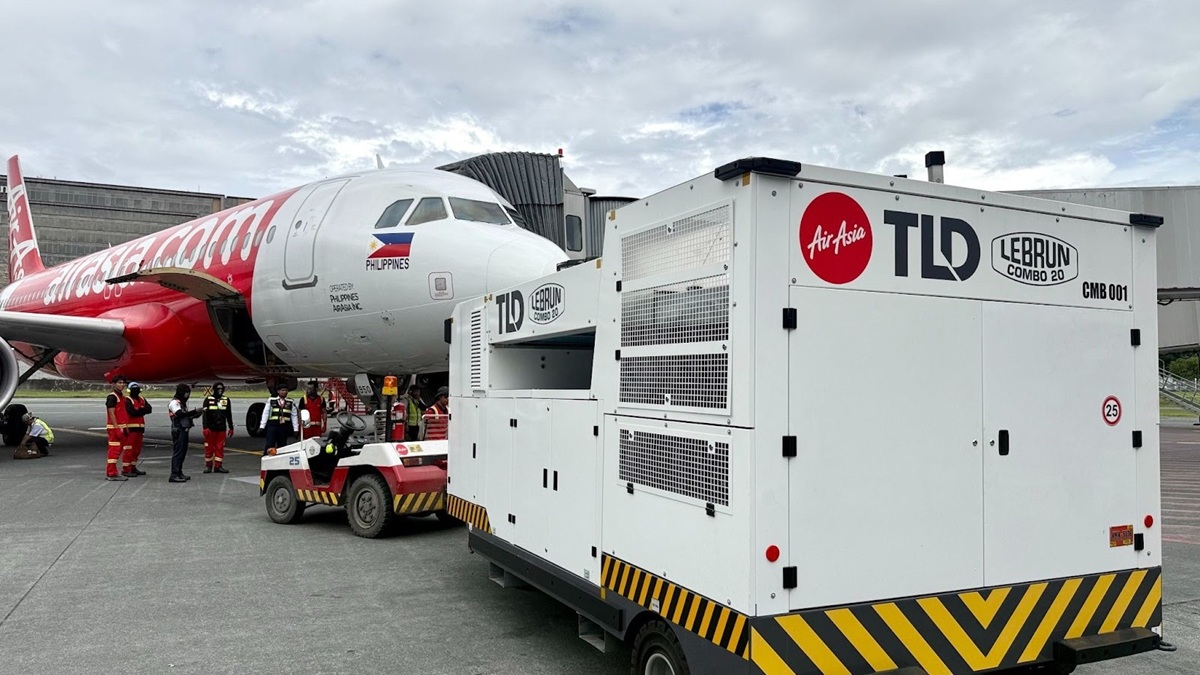
AirAsia Philippines continues to lead the charge in sustainable aviation with the introduction of Combo Units—a groundbreaking integration of an air conditioning unit and ground power unit (GPU) that significantly boosts fuel efficiency and slashes carbon emissions.
This milestone marks a key step in localizing AirAsia Aviation Group’s regional decarbonization strategy, as AirAsia Philippines becomes the second airline in the group to deploy this cutting-edge technology at Manila’s Ninoy Aquino International Airport (NAIA), following a successful rollout in Malaysia.

Reducing Carbon Emissions on the Ground
The Combo Units deliver both electrical power and air-cooling support to aircraft parked on the ramp during pre-flight and transit. By minimizing the need for the aircraft’s auxiliary power unit (APU), this innovation can reduce ground carbon emissions by up to 90% under optimal operation—without compromising passenger comfort.
Beyond environmental benefits, the initiative also helps lower noise and air pollution on the ramp, enhancing the working environment for ground crews, baggage handlers, and technicians.
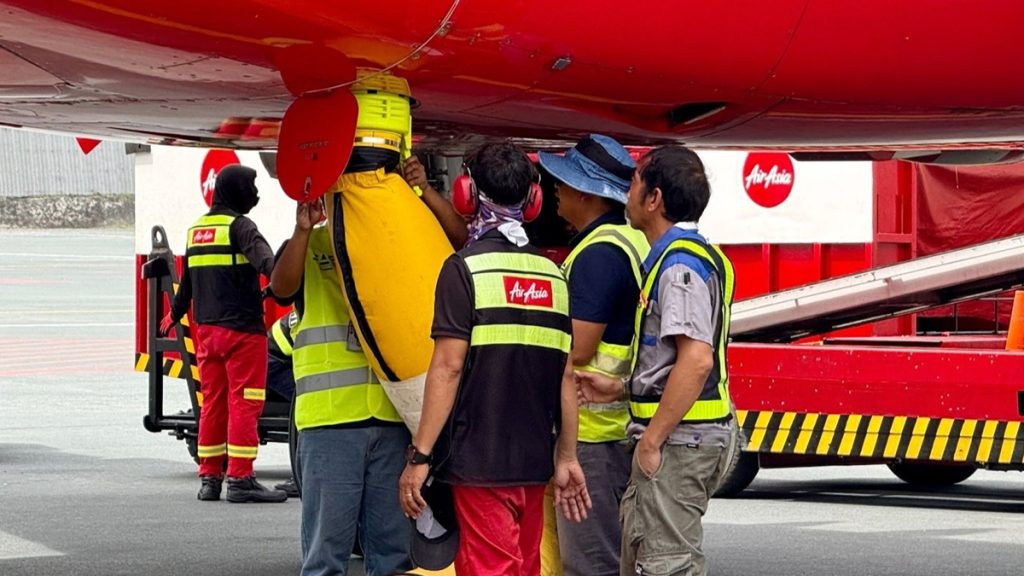
The deployment of just two Combo Units is projected to reduce 1,300 tonnes of CO₂ annually, demonstrating how small-scale technology can drive large-scale impact.
“Our efforts to reduce emissions go hand in hand with improving the travel experience of our guests,” said Capt. Suresh Bangah, CEO of AirAsia Philippines. “The Combo Units not only lower our fuel consumption and carbon footprint but also ensure our guests remain comfortable while the aircraft is on the ground, ready for their purposeful journey.”
Fuel Efficiency and Performance Gains
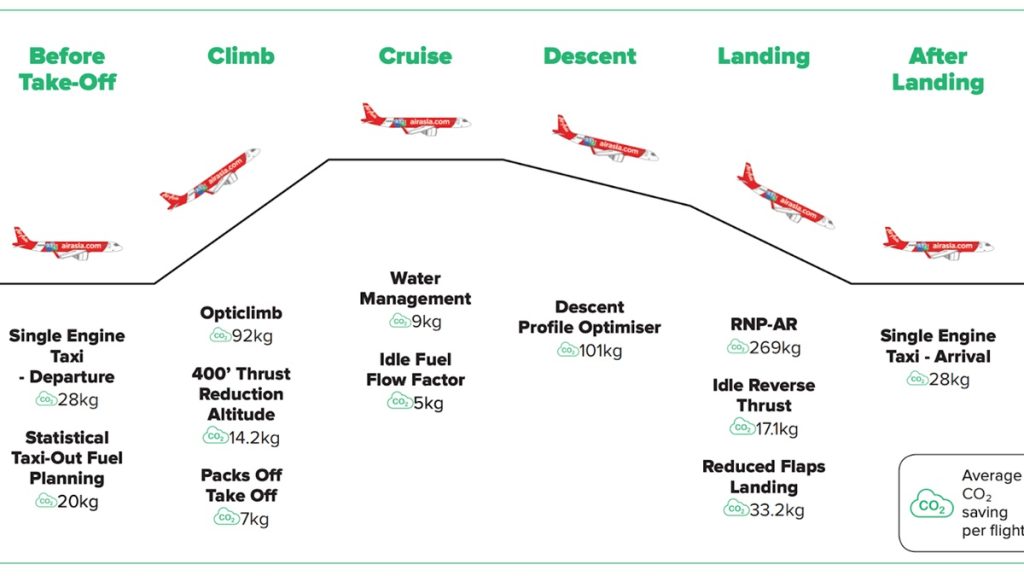
The adoption of Combo Units complements AirAsia Philippines’ broader fuel efficiency program, which in 2024 alone helped the airline save 3,851 tonnes of fuel and avoid 12,169 tonnes of CO₂ emissions.
As a result, the airline achieved a notable improvement in carbon intensity:
- CO₂ per Available Seat Kilometer (ASK): down by 1.2g to 73.9g
- CO₂ per Revenue Passenger Kilometer (RPK): down by 3.1g to 82.8g, driven by better operational efficiency and higher load factors.
Beyond the Tarmac: Greener Cabin Operations
AirAsia Philippines is also extending its sustainability mission into the skies with enhanced in-flight waste management and circularity practices:
- Waste Diversion: In 2024, 37% of total in-flight waste was successfully diverted from landfills through active segregation and processing.
- Green Packaging: Partner brand Santan Philippines aims to transition from single-use plastics to compostable PLA (polylactic acid) packaging by October 2026, using renewable materials such as corn and cassava to further cut down plastic waste.
Global Recognition for Sustainability Leadership
AirAsia’s consistent drive toward environmental responsibility continues to earn recognition worldwide:
- AirlineRatings.com Sustainability Awards: Named among the Top 3 Low-Cost Carriers globally for sustainable practices.
- 42kft.com Environmental Audit: Ranked among the Top 25 carriers out of 142 airlines worldwide, earning a perfect 10/10 sustainability score for transparency and data-driven environmental efforts.
Through these initiatives, AirAsia Philippines reaffirms its long-term commitment to Net Zero by 2050, integrating sustainability into every aspect of its operations—from the ground to the skies—ensuring that every flight contributes to a cleaner, more responsible future for air travel.