Two Philippine National Police (PNP) officers represented the Philippines at the third edition of the Policing Innovation and International Leadership Diploma (PIL), highlighting the country’s expertise and experience in community engagement, proactive crime prevention, crisis adaptability, and operational resilience before fellow law enforcement professionals from 45 countries.
Major Richard Curada Luzano and Captain Modesto Dumanging Nahiwan participated in the international program organized by the Dubai Police in partnership with the Rabdan Academy. The program brought together law enforcement professionals from various countries to exchange knowledge and experiences while examining emerging approaches to leadership, innovation, community engagement, and modern policing.
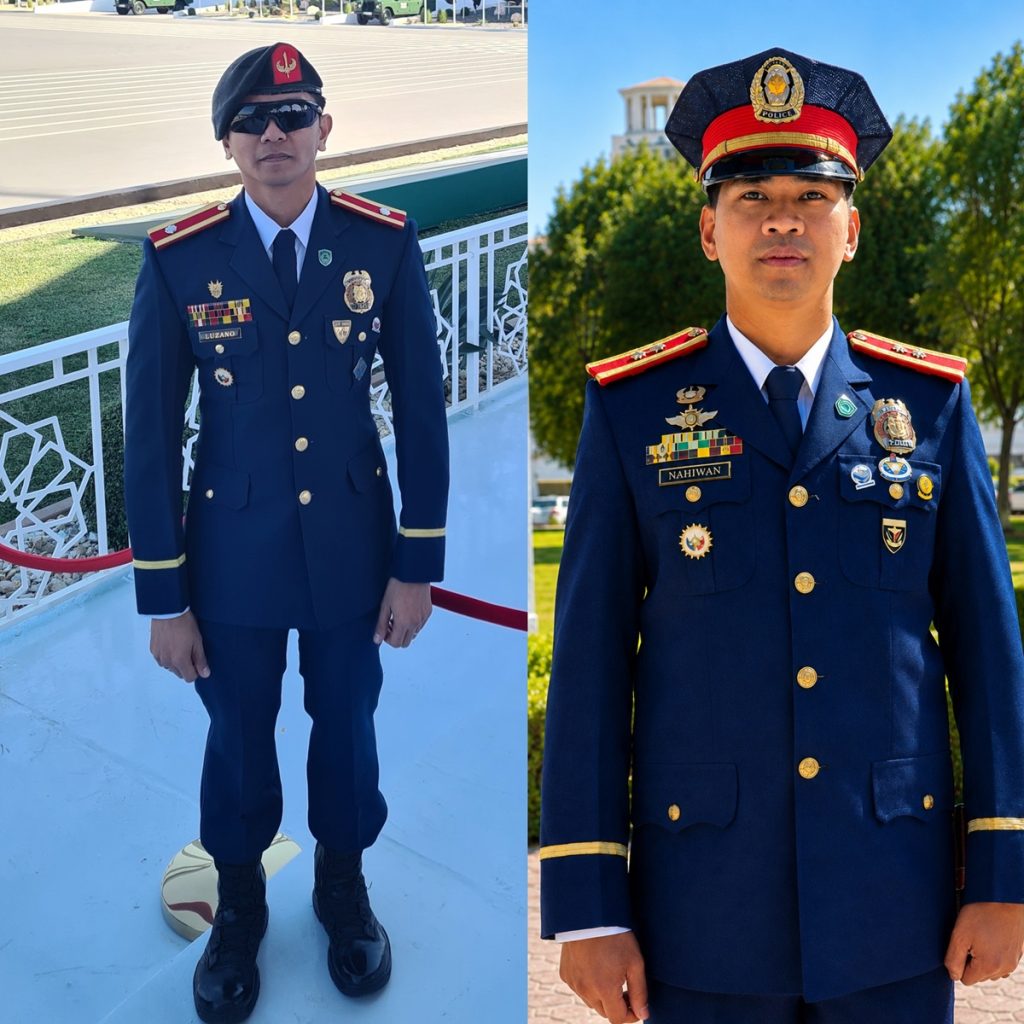
For the two PNP officers, the program served as a platform not only to gain insights from international policing practices but also to share Philippine perspectives and approaches in discussions shaping the future of law enforcement.
Philippine Policing Expertise on the International Stage
Major Luzano shared the PNP’s experience in community engagement strategies and proactive crime prevention, providing international participants with insights into approaches employed in the Philippines to strengthen police-community relations and support safer communities.
Captain Nahiwan, meanwhile, presented Philippine experiences in community partnerships, crisis adaptability, and operational resilience, emphasizing the importance of maintaining effective police services amid evolving challenges and complex security environments.
The officers said the international exchange was a significant component of the program, providing opportunities to compare policing challenges, examine effective practices, and gain insights from diverse law enforcement models.
“This programme provided me with a unique opportunity to enhance my leadership capabilities, broaden my perspective on modern policing strategies and gain valuable insights into innovative practices that can be applied within my organisation.”
Advancing Filipino Leadership in Policing
For Major Luzano, participation in the program represented an important step in strengthening his professional leadership capabilities and advancing his understanding of contemporary policing.
Among the key lessons he gained was the importance of adaptive leadership, particularly in addressing the demands of a rapidly changing security environment.
He emphasized that modern policing requires a combination of strategic thinking, innovation, multi-stakeholder collaboration, and proactive responses to emerging challenges.
Captain Nahiwan said his participation was driven by the opportunity to gain a broader international perspective on innovation in policing. He noted that the experience exceeded his expectations and provided valuable insights that could contribute to the continuous development of police services in the Philippines.
“The programme strengthened international cooperation among participating countries and equipped me with a forward looking mindset to develop our services in the Philippines.”
For Captain Nahiwan, excellence in policing should ultimately be measured by its impact on communities, the value it contributes to public service, and its adherence to the principles of police legitimacy and procedural fairness.
Leadership, Knowledge Exchange, and Innovation
Leadership development and innovation were among the central themes of the program.
Major Luzano cited the application of frameworks such as Tuckman’s model of group dynamics, along with various innovation methodologies introduced throughout the program.
He noted that innovation goes beyond improving existing processes. It also requires organizations and leaders to look beyond established practices and explore new possibilities that can improve the effectiveness and responsiveness of public service.
Captain Nahiwan likewise emphasized the importance of integrating smart technologies, leadership development, and community engagement in developing more proactive, responsive, and effective policing systems.
Learning from Dubai’s Smart Policing Model
The program also provided the Philippine delegates with an opportunity to examine the Dubai Police’s approach to technology, innovation, and public service delivery.
Major Luzano expressed particular interest in the Smart Police Stations (SPS), which provide integrated self-service police services around the clock while maintaining privacy and security. He described the initiative as “innovation at its finest.”
Captain Nahiwan highlighted Dubai Police’s broader ecosystem of advanced technologies and smart infrastructure, describing it as evidence of the organization’s “steadfast commitment to innovation and excellence in serving the public.”
The exposure provided the officers with additional perspectives on how technology and innovation can support more accessible, efficient, and citizen-centered police services.
Applying International Insights in the Philippines
Following their participation in the program, both officers intend to apply relevant knowledge and practices to their work in the Philippines.
Major Luzano plans to further develop his leadership approach and contribute to strengthening a culture of innovation within his organization, particularly in the areas of community engagement and strategic problem-solving.
Captain Nahiwan, meanwhile, aims to promote technology-enabled and community-centered policing, with particular emphasis on strengthening police legitimacy and improving service delivery.
Their commitment reflects the broader objective of translating international learning opportunities into practical initiatives that can contribute to the continuous improvement of Philippine policing.
Strengthening International Police Cooperation
The program also strengthened professional relationships between the Philippine delegates and law enforcement representatives from 45 countries.
According to the officers, international police cooperation has become increasingly important in addressing transnational crime, intelligence sharing, and the exchange of best practices.
Building stronger professional networks among law enforcement organizations also creates opportunities for continued knowledge exchange and collaboration, helping contribute to the advancement of policing standards globally.
For the Philippines, participation in international programs such as the PIL further strengthens the country’s engagement with global policing networks and provides opportunities to share Philippine practices while learning from international counterparts.
Strengthening the Philippine Presence in Global Policing
Major Luzano described his participation in the program as a “memorable and meaningful experience” that enhanced his leadership capabilities and broadened his perspective on modern policing.
Captain Nahiwan characterized the program as a “transformative and enriching journey” that strengthened his leadership skills and reinforced his commitment to excellence in serving the community.
The participation of the two PNP officers underscores the contribution of Philippine law enforcement experience and expertise to the international exchange of knowledge, leadership practices, and policing innovations.
As they return to their respective duties, Major Luzano and Captain Nahiwan bring with them new perspectives, strengthened international professional networks, and practical approaches that can support the continued development of innovative, proactive, resilient, and community-focused policing in the Philippines.