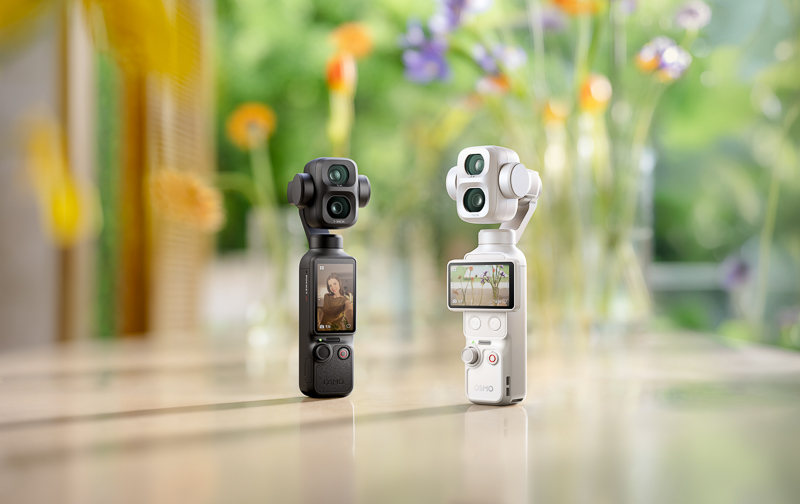
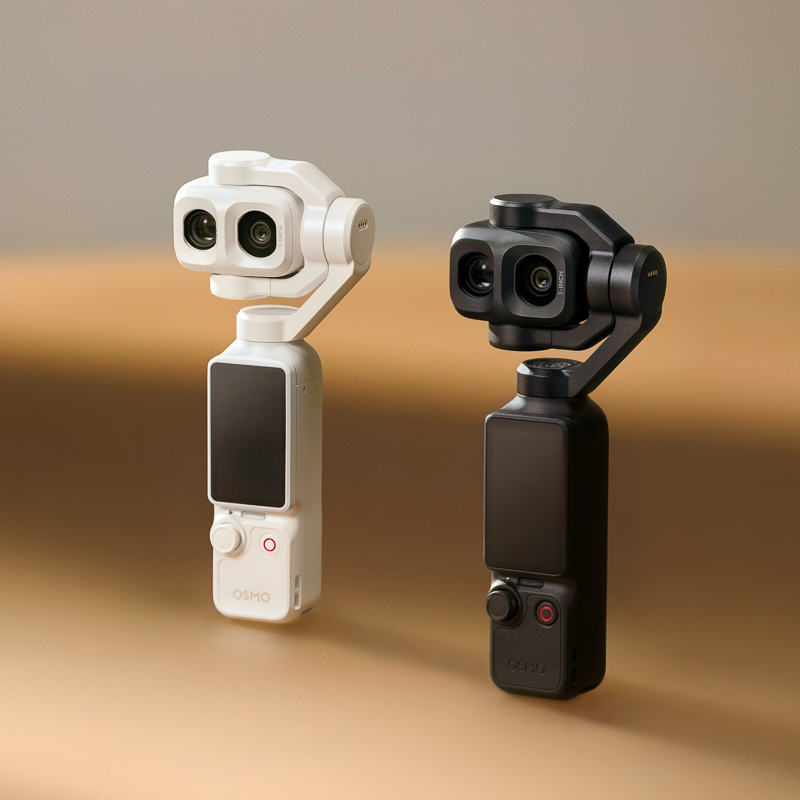
For years, content creators faced a clear trade-off: carry a heavy mirrorless camera setup with lenses and gimbals, or rely on a smartphone with limited optical capabilities and computational processing. The DJI Osmo Pocket 4P bridges this gap by combining professional-grade video features, dual optical lenses, and 3-axis mechanical stabilization into a pocketable 230g device making it the ideal content creator photo and vlog camera.
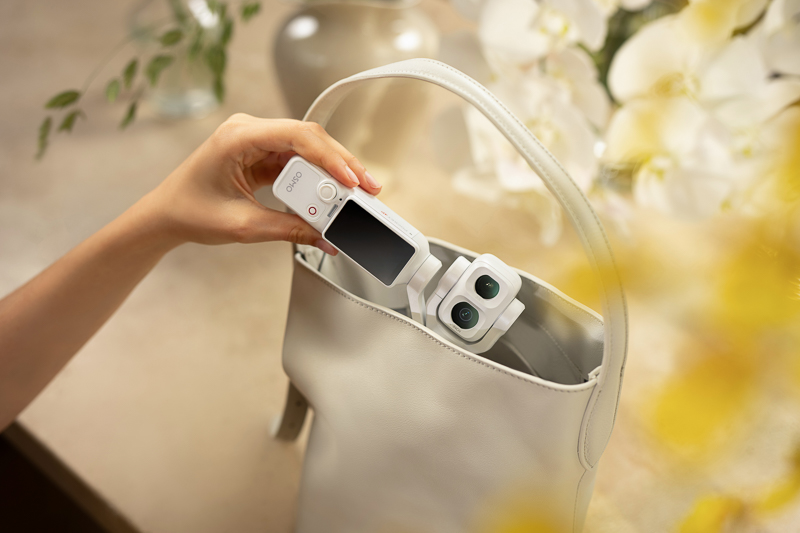
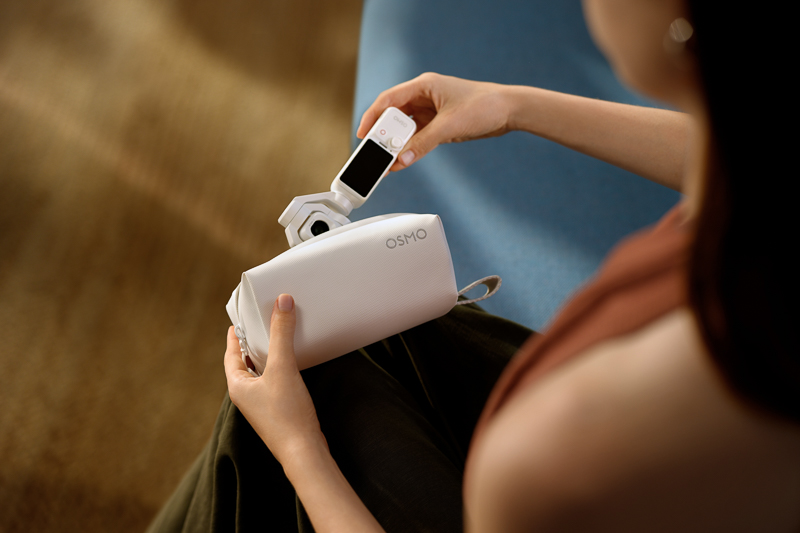
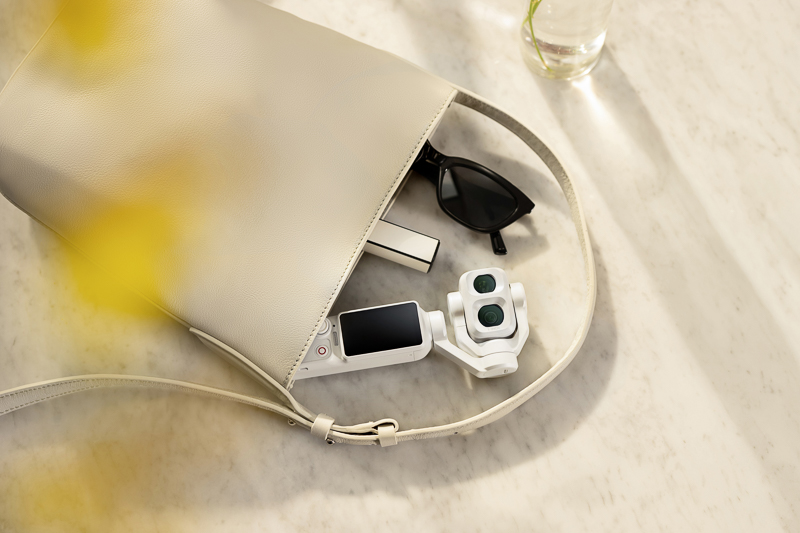
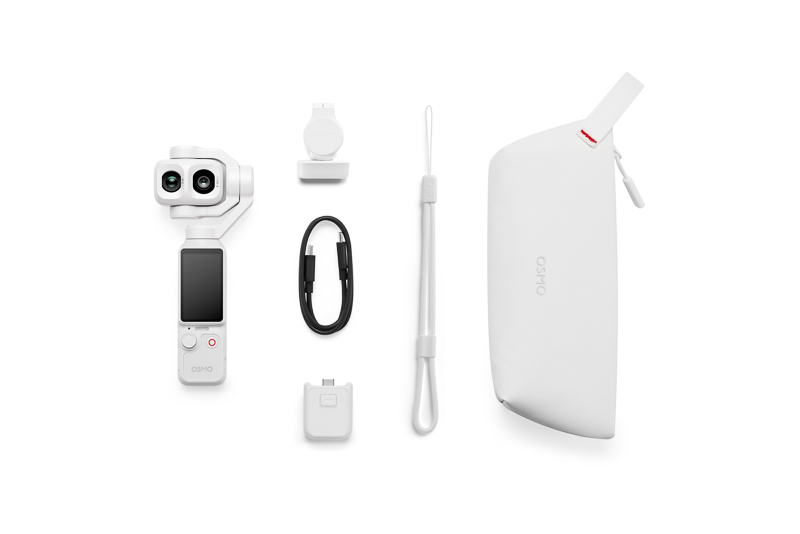
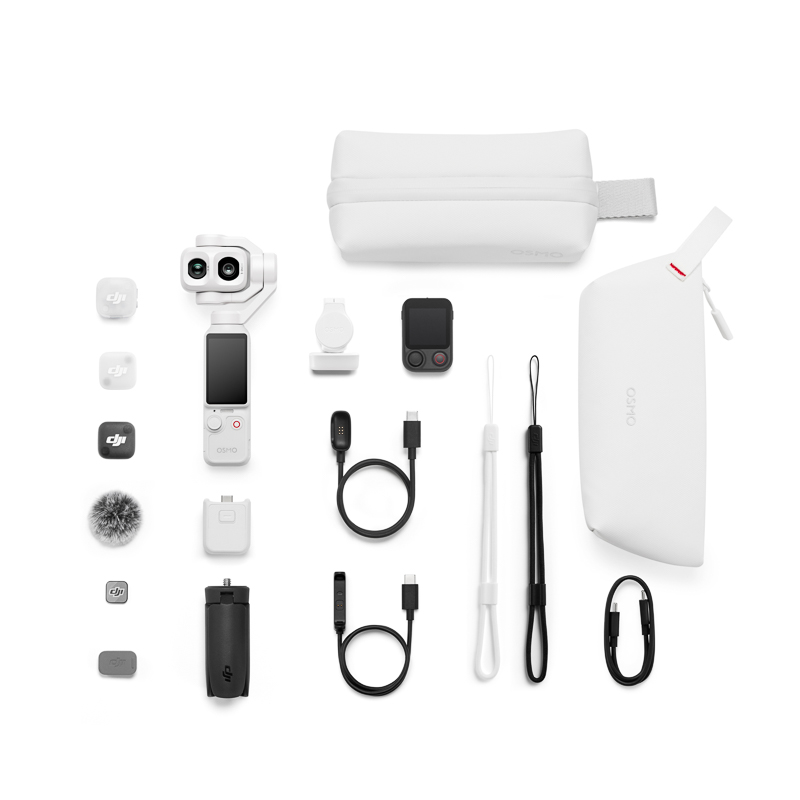
From October 20 8 pm, Pearl White color is now also available with matching white accessories and pouches.
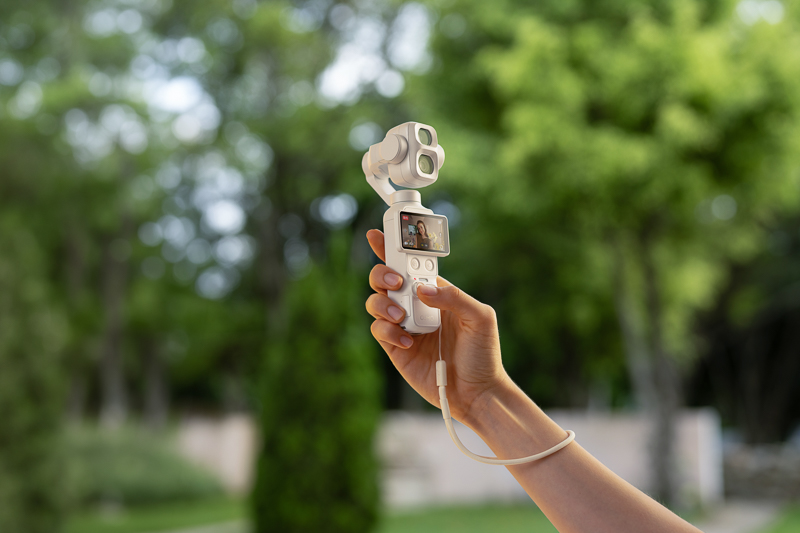
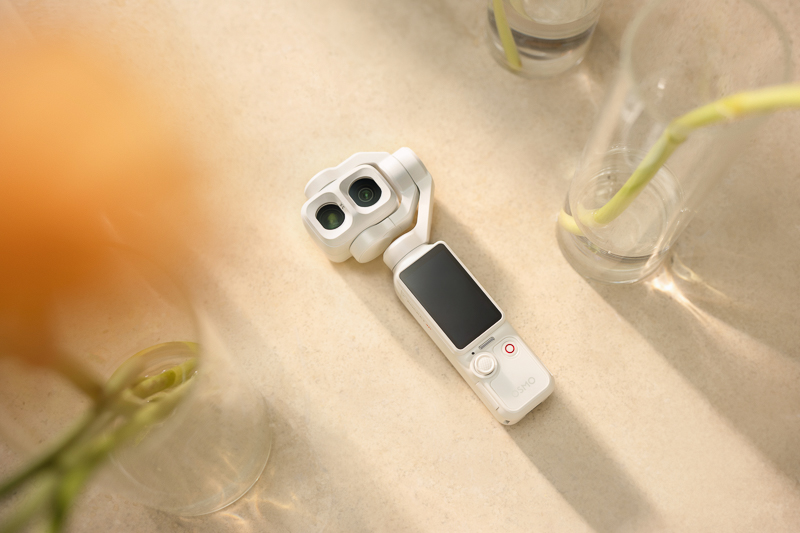
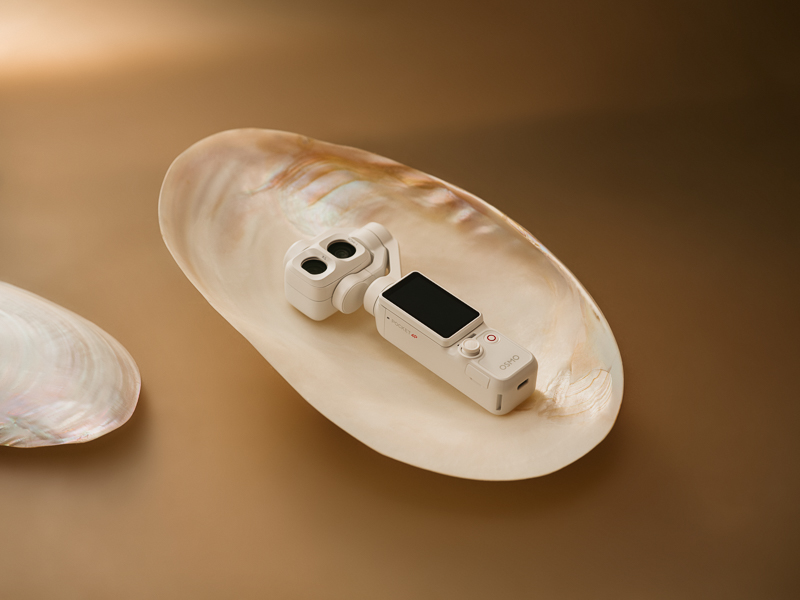
In this review, we break down the key technical specifications, explain how those features translate into real-world production value, and evaluate whether the Pocket 4P can genuinely upgrade your content creation workflow.
Technical Specifications & Real-World Creator Impact
Understanding camera specs can be daunting, but what matters most is how those technical numbers shape your day-to-day workflow and video quality.
1. Dual-Lens System: 20mm Wide & 60mm Medium-Telephoto
Technical Spec:
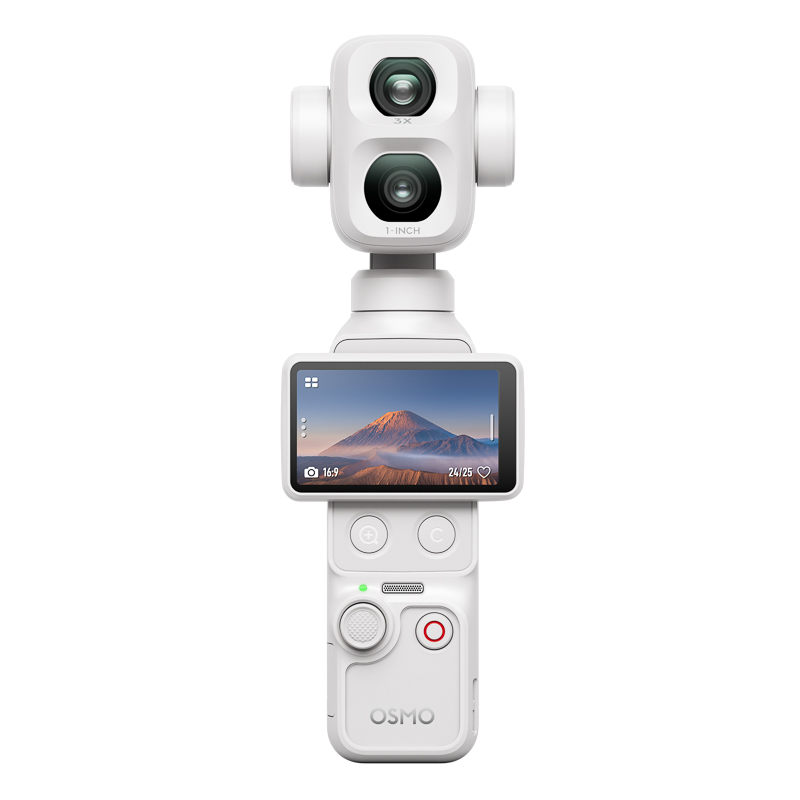
- Main Wide Lens: 20mm equivalent focal length with an f/2.0 aperture, paired with an all-new 1-inch CMOS sensor (0.2m / 9cm minimum focus distance).
- Telephoto Lens: 60mm equivalent focal length (3x optical zoom) with a fast f/1.8 aperture, paired with a 1/1.28-inch sensor (0.3m / 20cm minimum focus distance).
- Digital Extension: Smooth digital zoom up to 12x (with 6x yielding clean, highly usable footage).
What It Means in Real Situations:
- The 20mm wide lens is your go-to for arm’s-length vlogging, wide landscape establishing shots, and handheld tracking. With the use of the optional magnetic wide angle lens, the Field of View (FOV) expands the standard 20mm primary lens (approx. 103°–108°) down to a wider 15mm equivalent (108°–110°)
- The 60mm medium-telephoto lens solves one of the problems of single-lens pocket cameras: wide-angle facial distortion. The 60mm focal length provides natural facial proportions, compressed backgrounds, and physical optical bokeh (background blur). It allows you to shoot tight product B-roll, flattering talking-head interviews, and detail shots without standing directly in your subject’s face.
2. 1-Inch LOFIC Sensor & 17-Stop Dynamic Range
Technical Spec:
The primary 1-inch sensor incorporates Lateral Overflow Integration Capacitor (LOFIC) technology, providing a theoretical dynamic range of up to 17 stops.
What It Means in Real Situations:
Dynamic range determines how well a camera captures extremely bright highlights (like the sky or direct sunlight) and dark shadows in the same frame without clipping to pure white or losing shadow detail to noise.
While real-world independent testing measures clean usable dynamic range closer to 12 to 15 stops (matching high-end full-frame and APS-C mirrorless cameras), it allows you to shoot in harsh backlit outdoor conditions or high-contrast studio setups while keeping your face evenly exposed and the background detail intact.
3. Log Profiles (D-Log & D-Log 2) & Color Science
Technical Spec:
10-bit color depth supporting D-Log 2 (base ISO 100 on the 1-inch main sensor) and original D-Log (base ISO 400 across all zoom ranges).
What It Means in Real Situations:
D-Log 2 unlocks maximum dynamic range latitude for color grading, allowing footage to integrate seamlessly alongside cinema-grade color workflows. It is not available in the 3X lens range.
Original D-Log provides a flexible 10-bit flat profile across both the 1x and 3x lenses, making it the preferred choice for run-and-gun creators who frequently switch between wide shots and zoomed B-roll.
Pro Tip: Standard color mode applies heavy internal sharpening and noise reduction. Setting camera texture to -2 and noise reduction to -1 removes the artificial “smartphone look” for a more organic, cinematic aesthetic.
4. 4K High-Frame-Rate Slow Motion (Up to 240fps)
Technical Spec: Records 4K video up to 240fps on the main 20mm lens and 200fps on the 3x telephoto lens. Recent firmware updates unlock D-Log recording in slow-motion mode.
What It Means in Real Situations: You can capture crisp 8x slow-motion B-roll of fast action, sports, liquids, or cinematic travel montages without losing resolution. Being able to shoot slow motion in D-Log means your high-frame-rate B-roll will match the color grade of your standard 24fps or 30fps A-roll footage.
5. 3-Axis Mechanical Gimbal & ActiveTrack 8.0
Technical Spec: Integrated 3-axis mechanical gimbal with ActiveTrack 8.0 operating across both wide and telephoto lenses, plus 45-degree diagonal joystick control.
What It Means in Real Situations:
- Unlike electronic image stabilization (EIS), which crops your frame and struggles in low light, mechanical stabilization physically counters camera movement for buttery-smooth walk-and-talk vlogs.
- ActiveTrack locks onto faces or objects—even through crowded environments—making solo filming effortless. You can set the camera on a desk or tripod/monopod, activate tracking, and present to camera while moving freely without stepping out of frame.
6. Battery Life, Thermal Performance & Storage
Technical Spec: 1545 mAh battery, 103GB built-in high-speed storage (up to 800MB/s USB 3.1 transfer), and fast charging (0 to 80% in 18 minutes).
What It Means in Real Situations:
- The camera records over 2 hours continuously in standard 4K/50fps/60fps modes without thermal overheating issues.
- Note on Overheating: Continuous slow-motion recording at 4K 120fps thermal-throttles at around 23 minutes, while 4K 240fps recording caps out at 13.5 minutes approximately.
- Built-in 103GB storage acts as a safety net if your microSD card fills up mid-shoot or in case you forgot your microSD card
7. Seamless Audio: The DJI Mic Ecosystem Integration
Great video is only half the equation—poor audio will ruin even the highest-quality 4K footage. One of the biggest workflow advantages of the DJI Osmo Pocket 4P is its direct, native integration with the DJI Mic ecosystem.
a. Direct Transmitter Pairing (Zero Cable and Receiver Unit)
- How It Works: The Pocket 4P features a built-in wireless receiver, allowing transmitters like the DJI Mic 2, 3 or the DJI Mic Mini 2, or Mini 2S to pair directly to the camera hardware without plugging an external receiver dongle into the USB-C port. A DJI Mic Mini 2 is included in the Vlogger Combo.
- Real-World Impact: You get an instantaneous, wireless audio setup the second you power on the gear. With no receiver dangling from the side, your gimbal’s clearance and balance remain completely unhindered during active, handheld movement.
b. Multi-Mic Stereo Splitting
- How It Works: The camera natively receives multiple wireless microphone channels simultaneously.
- Real-World Impact: When filming two-person interviews, co-hosted travel vlogs, or podcaster B-roll, the camera can automatically split the two microphone signals into separate left/right audio channels in your clip. This gives you complete independence in post-production to adjust individual speaker volumes or clean up background noise on one channel without affecting the other.
c. Smart Remote Triggering via Mic Transmitter
- How It Works: You can re-purpose the physical pairing button on your connected DJI Mic transmitter to act as a remote shutter control.
- Real-World Impact: If you have the camera mounted out of reach—such as on a tripod across the room or high on a boom stand—you can start and stop recording directly from your lapel mic. This is particularly useful for solo creators capturing high-frame-rate slow-motion clips, preventing bloated video files and saving storage space.
d. USB-C Digital Audio & Built-In Backup
- How It Works: Beyond wireless connectivity, the camera’s USB-C port supports direct digital audio input from third-party USB microphones (like the Rode PodMic USB) for studio desk setups. Additionally, the built-in internal mic array offers reasonable dialogue isolation out of the wind and can record an internal backup track.
- Real-World Impact: You have total flexibility depending on your shoot environment—go wireless for run-and-gun vlogging, plug in a broadcast-grade USB desk mic for studio talking heads, or rely on internal audio as a safety net.
Real-World Production Workflows for Creators
Solo Vlogging & Travel Content
The 230g form factor allows you to carry a complete production setup in a jacket pocket. When vlogging in bright sunlight, pairing the camera with the optional ND filter (such as an ND16 or ND64) is necessary to keep your shutter speed at the correct 180-degree rule while maintaining proper exposure at base ISO. With a light monopod or tripod, or mounting accessories like magnetic or clamp mounts, and enabling ActiveTrack, it can track you making making solo filming effortless.
Event Coverage & Interviews
Talking-Head Studio & Dual-Camera Setup for Video Podcasting or Online Live Selling
The Pocket 4P can function as a primary studio camera or an automated B-camera. By mounting it nearby, setting the 60mm lens to track a product or subject, and feeding USB-C digital audio directly into the camera (or pairing with DJI Mic transmitters), you achieve a dynamic two-camera talking-head setup without needing an extra camera operator. Connect it to a computer as a webcam or compatible video mixer that supports USB-C UVC protocol and you have more camera angles to select from.
With the DJI Mic Ecosystem, you can use DJI wireless mics as your audio input.
You can even use professional podcasting mics with USB output and can connect directly to the USB port of the Pocket 4P for broadcast quailty audio. You can even connect multiple professional XLR mics to an audio interface and plus the interface USB C output to Pocket 4P.
Photography & Time-Lapse Features
While primarily designed for video, the camera takes 37MP JPEG/RAW photos, supports 180° and 3×3 stitched panoramas, and includes an option within time-lapse mode to save individual RAW frames for high-resolution photo editing.
Usability Quirks & Limitations
Despite its technical achievements, there are operational considerations to keep in mind:
- Exposure Shift Bug Between Lenses in Log: When switching from the 1x lens to the 3x telephoto lens while shooting in Log profile, the footage can jump noticeably in brightness, requiring manual exposure readjustments in post-production or in-camera menus.
- Menu Navigation & Small Touchscreen: Changing manual exposure settings (shutter speed, ISO, white balance) requires navigating multiple sub-menus on a compact screen that can sometimes feel unresponsive. Using a phone or better a tablet with DJI Mimo app will give you a bigger screen and remote control.
- No Vertical Axis (Z-Axis) Stabilization: Like most 3-axis gimbals, it stabilizes pan, tilt, and roll, but vertical up-and-down movement while walking still transfers to the shot unless you perform a stabilized “ninja walk”.
- Mandatory Privacy App Activation: Setting up the device requires registering through the DJI Mimo smartphone app, which may raise privacy concerns for users who prefer standalone hardware.
- No Hard Case Included: The device ships with a soft pouch rather than a rigid protective shell, leaving the exposed gimbal and screen vulnerable during transit.
Pros and Cons Summary
Pros
- Dual Native Focal Lengths: 20mm wide for vlogging and 60mm medium-telephoto for distortion-free portraits and B-roll.
- Exceptional Dynamic Range: 1-inch LOFIC sensor provides clean highlight and shadow retention rivaling larger mirrorless cameras.
- 10-Bit Log Flexibility: D-Log and D-Log 2 profiles give substantial grading latitude, now available in high-frame-rate slow-mo.
- 4K 240fps Cinema Slow-Motion: High-detail, high-frame-rate recording with minimal aliasing.
- Integrated Hardware: 3-axis mechanical gimbal, 103GB internal memory, and fast 18-minute charging.
- DJI Mic Ecosystem Compatibility and USB C Audio Input: Use your existing DJI wireless mics or plug-in your professional podcasting mic via USB C
- Webcam UVC: it can be used as a high quality webcam when connected to a PC/Laptop.
- Livestreaming: You can livestream to Facebook, Youtube and other platforms using RTMP.
- Remote Control & Gestures: You can use the Frame tap controller (included in Vlog combo) or gestures to remote control
Cons
- Log Exposure Switching Bug: Automatic exposure jumps when toggling between 1x and 3x lenses in Log mode.
- Fiddly Touchscreen UI: Small controls make quick manual exposure adjustments clunky on the fly.
- Thermal Limits in High-FPS Modes: Overheats after ~13.5 mins in 4K 240fps or ~23 mins in 4K 120fps.
- App Dependency: Requires smartphone activation via the DJI Mimo app prior to first use.
- Lack of Hard Case: Exposed gimbal structure relies on a soft pouch for protection.
Final Verdict: Should You Buy the DJI Pocket 4P?
The DJI Osmo Pocket 4P is one of the most powerful all-in-one tools available for travel vloggers, solo content creators, and YouTube producers and even for video podcasters. While it won’t entirely replace a professional mirrorless camera system with interchangeable telephoto lenses for high-end commercial jobs, its combination of a 60mm portrait lens, 1-inch LOFIC sensor, 10-bit Log recording, and pocketable stabilization makes it a premier primary photo and vlog camera for run-and-gun creators or a lightweight secondary angle for studio production. The possibilities for creating content using the DJI Pocket 4P is limitless!
PRICE AND AVAILABILITY
STANDARD COMBO: ₱37,790 (BLACK OR PEARL WHITE)
Vlog Combo – ₱42,290 (BLACK OR PEARL WHITE)
Available on popular online shopping plaforms, DJI Authorized Stores and your favorite camera and gadget stores in the Philippines.