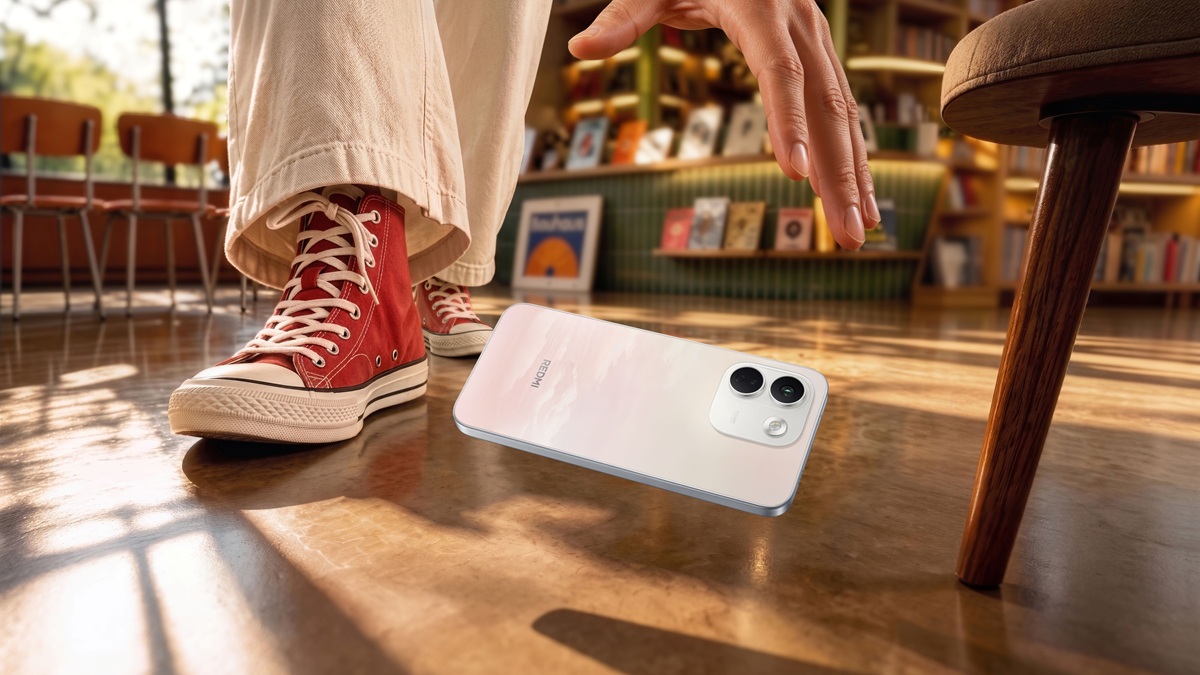
Drop resistance, water resistance, and the structure behind them
“Durable.” “Rugged.” “Water-resistant.” These words appear on nearly every smartphone box, making them increasingly meaningless when comparing devices. The more important questions are how durable a phone can actually be, how much protection users really need, and whether the added engineering is worth the cost compared with replacing a cracked or water-damaged phone a year ahead of schedule.

The REDMI Note 17 Series, launched locally in September this year, offers an interesting case study because its durability features are unusually specific. Rather than relying on a single claim of toughness, Xiaomi has developed a package called Titan Durability, designed to address three of the most common threats to a smartphone’s lifespan: drops, water exposure, and everyday wear.
However, not all four models offer the same level of protection. The REDMI Note 17 Pro Max 5G, REDMI Note 17 Pro 5G, REDMI Note 17 5G, and standard REDMI Note 17 come with different durability features, and those distinctions help explain what Titan Durability means in practical terms.
Drops: Glass Plus Structure
Most smartphone damage begins at the screen, the largest and most exposed surface of the device and often the first component to fail during a fall. The two Pro models address this vulnerability with Corning Gorilla Glass Victus 2, a protective glass technology typically associated with more expensive flagship smartphones.
Its strength comes not simply from thickness but also from chemical strengthening. During the process, the glass is immersed in a hot potassium salt solution, allowing smaller ions near its surface to be replaced by larger ones. These larger ions create a state of compression that helps resist the formation and spread of cracks when the glass flexes under impact.
According to SGS laboratory testing, the Pro models can withstand drops from heights of up to three meters onto granite. They also carry TÜV SÜD 5-star Drop Resistance Certification.
Still, tougher glass alone cannot guarantee a damage-free phone. The energy generated during a fall must be absorbed or distributed somewhere. If the frame cannot handle the impact, the glass may flex beyond its limits and crack despite its protective properties.
This is where the REDMI Titan Structure comes in. Available on the Pro models, the reinforced internal frame is designed to distribute impact forces throughout the device, allowing the screen and chassis to work together as an integrated protective system.
Meanwhile, the standard REDMI Note 17 and REDMI Note 17 5G use Corning Gorilla Glass 7i, which is engineered to offer scratch resistance for up to 3,000 cycles. This protection addresses the everyday wear screens experience when sharing pocket space with keys, coins, and other objects.

Water: How Far Each One Goes
The easiest way to understand the series’ water protection is to look at the ratings. The two Pro models offer the highest level of protection, making them better equipped to handle accidental water exposure.
The REDMI Note 17 Pro Max 5G and REDMI Note 17 Pro 5G carry four separate water-resistance ratings, including IP69 and IP69K. These high-level ratings are more commonly associated with industrial equipment designed to withstand demanding cleaning conditions, including high-pressure water jets and, under specified test conditions, hot water.
For smartphones, this level of protection is relatively uncommon. Xiaomi has also subjected the Pro models to immersion testing at a depth of two meters for 72 consecutive hours, with TÜV SÜD verification following eight different tests.
The standard REDMI Note 17 and REDMI Note 17 5G, meanwhile, carry an IP65 rating. Although they are not intended for swimming or prolonged immersion, this level of protection is designed to handle everyday situations such as rain, accidental spills, and wet countertops.
For most users, that already covers many of the water-related incidents a phone is likely to encounter.
All four models also feature Wet Touch Technology 2.0, which helps maintain touchscreen responsiveness when fingers are wet or sweaty. Instead of dealing with missed taps or unintended inputs, users can continue interacting with their phones in conditions such as rainy weather, while cooking, or during a workout.
There is, however, an important distinction between laboratory ratings and real-world use. Water resistance can deteriorate over time, and liquid damage is not covered by the warranty. Users should therefore avoid deliberately exposing their devices to water and should never charge a phone while it is still wet.
Water resistance is best treated as protection against accidents, not an invitation to take a smartphone swimming.
Battery: How Long It Lasts
Durability is not limited to surviving physical accidents. Battery endurance also determines how reliably a smartphone can keep up with everyday demands.
According to Xiaomi’s typical-use testing, the REDMI Note 17 Pro Max 5G can last up to three days on a single charge. That translates into fewer trips to the charger during a long weekend or an extended period of heavy use.
The REDMI Note 17 Pro 5G and REDMI Note 17 5G are rated to deliver more than two days of battery life, offering enough endurance to cover much of a weekend without constantly searching for a power outlet.
When the battery eventually runs low, fast charging helps reduce downtime. Charging speeds vary by model:
- REDMI Note 17 Pro Max 5G: 100W fast charging
- REDMI Note 17 Pro 5G: 67W fast charging
- REDMI Note 17 5G: 45W fast charging
Actual battery life will vary depending on usage patterns, settings, connectivity, and other operating conditions.
Why It’s Worth Paying For
No smartphone is completely unbreakable, and Xiaomi does not claim otherwise. What stronger construction and protective features offer is a greater margin of safety against the accidents that can shorten a device’s useful life.
Tougher glass, a reinforced frame, and improved water sealing may add to the initial cost, but replacing a damaged smartphone can be significantly more expensive. Even a single screen replacement can consume a substantial portion of the original purchase price, while a device that becomes unusable prematurely may mean paying for an entirely new phone.

Avoiding even one major repair or early replacement could make the additional investment worthwhile.
For practical buyers, durability is less of a luxury feature and more of a form of insurance against everyday mishaps. The REDMI Note 17 Series makes that proposition tangible by offering different levels of protection across its lineup, allowing consumers to choose the model that best matches their needs and budget.
And a Warranty That Backs It Up
Xiaomi Philippines is complementing the series’ durability features with an extensive after-sales package that includes a five-year Battery Warranty, three-year Screen Protection, two-year Liquid Damage Protection, two-year Back Cover Warranty, and two-year Quality Warranty.
The combination provides an additional layer of reassurance: the device’s protective engineering helps reduce the risk of damage, while the warranty package offers added support when covered issues arise.
There are a few important details to keep in mind. These after-sales benefits remain available during the first-day sale period from October 2 to 11, 2026, while the extended warranty promotion is valid until the end of October.
Coverage and benefits vary depending on the model purchased, with the REDMI Note 17 Pro Max 5G and REDMI Note 17 Pro 5G receiving the most extensive benefits. Buyers should verify the specific coverage and terms applicable to their chosen variant at the time of purchase.
The REDMI Note 17 Series is available through Xiaomi’s official online store, Shopee, and Lazada, as well as Xiaomi offline stores nationwide.