In a significant step toward urban resilience, Borongan, Philippines, has teamed up with GCoM’s International Urban Transitions Mission to leverage artificial intelligence and global partnerships for accelerated climate action. The announcement was made during the UTM Global Innovation Summit held in Viladecans, Spain. As part of this global cohort, Borongan will gain access to newly expanded collaboration programs and actionable tools aimed at driving cities toward a climate-neutral future through people-centered innovation.
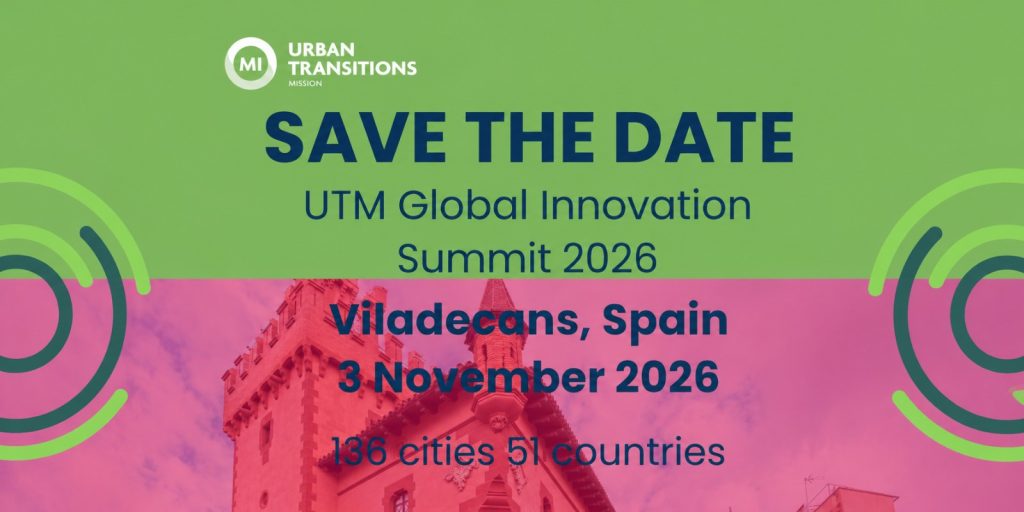
VILADECANS, SPAIN — The city of Borongan, Philippines, has officially joined the Urban Transitions Mission (UTM), a prominent international climate initiative co-led by the European Commission and the Global Covenant of Mayors for Climate & Energy (GCoM). The announcement, made during the 2026 UTM Global Innovation Summit, marks a major milestone as the network expands its global footprint to empower local governments in deploying people-centered climate solutions.
Gathering 200 delegates from municipalities, governments, research hubs, and the private sector, the summit focused heavily on leveraging artificial intelligence (AI), digital innovation, and cross-border alliances to fast-track urban shifts toward climate neutrality. Borongan enters the coalition alongside 31 other new member cities, including Incheon (South Korea), Lyon (France), Porto (Portugal), Sivas (Türkiye), and the summit’s host city, Viladecans (Spain).
With these latest additions, UTM’s network has grown to 150 cities across 54 nations.
The initiative aims to double its membership to 300 cities by 2030, a critical scale required to establish innovative urban development frameworks as standard global practices. This rapid expansion highlights a surging demand among municipal leaders for practical assistance in executing energy strategies, securing climate financing, and accessing specialized technical knowledge.
The collective impact of this network is substantial. Projections indicate that if participating UTM cities hit their current environmental targets, they could prevent over 390 million tonnes of greenhouse gas emissions annually by 2030, and up to 610 million tonnes per year by 2050 compared to baseline scenarios. This massive reduction roughly equates to the carbon footprint generated by nearly half a billion economy-class round-trip flights between Incheon and Istanbul.
Beyond environmental metrics, the UTM framework functions as an active collaborative platform. It enables local governments to systematically isolate implementation hurdles, share proven strategies, and forge direct partnerships with corporate, academic, and international entities.
The 2026 summit also served as a launchpad for several new ecosystem upgrades. These include the expansion of the “City2City” knowledge-sharing framework, fresh avenues for piloting AI-centric climate solutions, new research rollouts on digital urban sustainability, and the broadening of the Global Innovation Alliance.
“This Summit provides an essential platform to bring city leaders, researchers and innovators together in an open, action-oriented dialogue, turning the potential of digital technologies into practical solutions for cities. Through the ongoing work of our Global Innovation Alliance, we know that lasting progress happens when local governments share knowledge across borders, learn from one another and test solutions on the ground that can be scaled and replicated,” said Andy Deacon, Co-Managing Director of the Global Covenant of Mayors for Climate & Energy.
“Digital solutions and artificial intelligence offer promising opportunities to help cities turn their climate ambitions into concrete action. They can enable local governments to test solutions before investing and transform climate plans into projects capable of attracting financing. At the same time, it is essential to consider the environmental footprint of digital and AI solutions. These are not merely future possibilities,” said Miriam Badino, Technical Coordinator of the Urban Transitions Mission.
150 Cities Driving the Global Urban Energy Transition
“City networks such as the Urban Transitions Mission and GCoM provide local governments with a space to connect, share the real challenges they face, learn from different experiences, and access the knowledge, partners and solutions needed to accelerate urban transitions. They are the true drivers of the urban transition,” said Anne Hidalgo, Global Ambassador of the Global Covenant of Mayors for Climate & Energy.
To reinforce this urban transition, UTM is aggressively scaling the specialized knowledge and resource networks accessible to its member municipalities. The initiative’s Global Innovation Alliance has officially welcomed the Netherlands alongside four prominent new institutional partners: the Coalition for Disaster Resilient Infrastructure, Fundação Getulio Vargas, the Presencing Institute, and the Urban Sustainability Directors Network. These additions are set to solidify operational links between municipal leaders, academic bodies, and global urban sustainability organizations.
In tandem with these growing alliances, the mission is building technical tools designed to help local governments identify and deploy highly tailored environmental strategies. Chief among these is the forthcoming UTMC 2.0 digital platform, which will serve as a centralized hub connecting city administrators with technical toolkits, documented blueprints from successful pilot programs, specialized capacity-building courses, and viable green financing avenues.
From Innovation to Implementation: Connecting Cities with Solutions, Resources and Partners for the Transition
The core theme of the 2026 summit heavily emphasized the critical shift from theoretical innovation to field implementation. As global pressure intensifies for municipal governments to hit their climate targets, access to cutting-edge technology, funding, and specialized skill sets remains a primary hurdle. Throughout the forum, civic leaders and technological innovators focused on bridging these gaps through international alliances, with a particular focus on converting advanced digital frameworks and artificial intelligence models into highly practical, field-tested tools that yield measurable quality-of-life improvements for local communities.
“Viladecans has always believed that innovation should serve people and the planet, not the other way around. Hosting the 2026 UTM Global Innovation Summit is an opportunity to demonstrate that cities of all sizes can lead the way towards net-zero emissions and that AI, when guided by a clear purpose, becomes one of our most powerful tools,” said Olga Morales, Mayor of Viladecans, Spain.
With artificial intelligence and digital frameworks designated as the strategic priority for 2026, UTM has actively guided municipalities in pinpointing where these emerging technologies can drive the most impact—ranging from fortifying local climate resilience to optimizing urban zoning and unlocking green investments. However, summit dialogues also critically evaluated the environmental footprint of AI itself, underscoring that technological innovations must address genuine urban vulnerabilities rather than being deployed simply for the sake of modernization.
Convened under the official banner, “Accelerating Urban Transitions: Scaling Impact with Artificial Intelligence and Digital Innovation,” the fourth annual summit dedicated its programming to narrowing the divide between environmental goals and real-world execution. The event successfully bridged this gap by granting local governments direct access to the technical expertise, digital tools, and institutional networks required to generate tangible advancements for their citizens.
“Urban transitions require alliances built around shared objectives. Governments, cities, universities and innovators must act together with urgency and determination. Spain is pleased to host the Global Innovation Alliance Summit in Viladecans on 3 November. The Urban Transitions Mission demonstrates that when we bring science and local leadership together, we accelerate scalable, equitable solutions capable of advancing climate-neutral cities for all,” said Diana Morant, Spain’s Minister of Science, Innovation and Universities.
A core focal point of the summit was the necessity of bridging the gap between municipal planning and field implementation by pairing local governments with the right knowledge networks and strategic partners. This practical approach is already active through UTM’s City2City initiative.
Throughout 2026, the program successfully united 54 cities across 27 countries into 20 collaborative partnerships, allowing local administrators to exchange technical skills, engineer joint solutions, and map out innovative pilot projects. Building on this initial success, UTM officially opened its third call for applications, with the submission window closing on January 15, 2027.
This drive for actionable results was further highlighted by the presentation of the winners of the 2026 AI x City Climate Action Hackathon. Designed by specialized teams from the United States, Cameroon, Kenya, and India, these winning digital projects tackle critical municipal vulnerabilities, ranging from localized disaster response to filtering out flood-related misinformation and boosting community engagement. Through the UTM network, these tech innovators will be paired with interested member cities to evaluate real-world testing and deployment opportunities, effectively linking technological breakthroughs with practical urban applications.
The summit also served as the launchpad for two major research rollouts. The first, a UTM Compendium titled “Digital Solutions and Artificial Intelligence for Resilient, Inclusive and Net-Zero Urban Transitions,” outlines ten core strategic recommendations for state governments regarding the deployment of AI in city planning. The second report, co-authored with the Driving Urban Transitions Partnership (DUT) and titled “Positive Energy Districts and Neighbourhoods: A Global Perspective on Urban Transitions at the Neighbourhood Scale,” compiles data and operational takeaways from over 100 pilot projects across Europe.
Following the summit, the mission’s active engagements will move to the Smart City Expo World Congress in Barcelona. Serving as a supporting organization, UTM is co-hosting a series of events on November 4 to link city leaders with verified climate frameworks and fresh cross-border alliances.
Looking ahead into 2027, UTM plans to scale these programs to fortify international climate cooperation, champion ethical AI deployments, and reinforce urban climate resilience through nature-based infrastructure. Across its expanding global alliance, the mission’s ultimate goal remains firm: empowering cities to move past mere climate pledges and abstract ideas, turning them into practical, scalable, and highly replicable solutions that directly elevate communities worldwide.