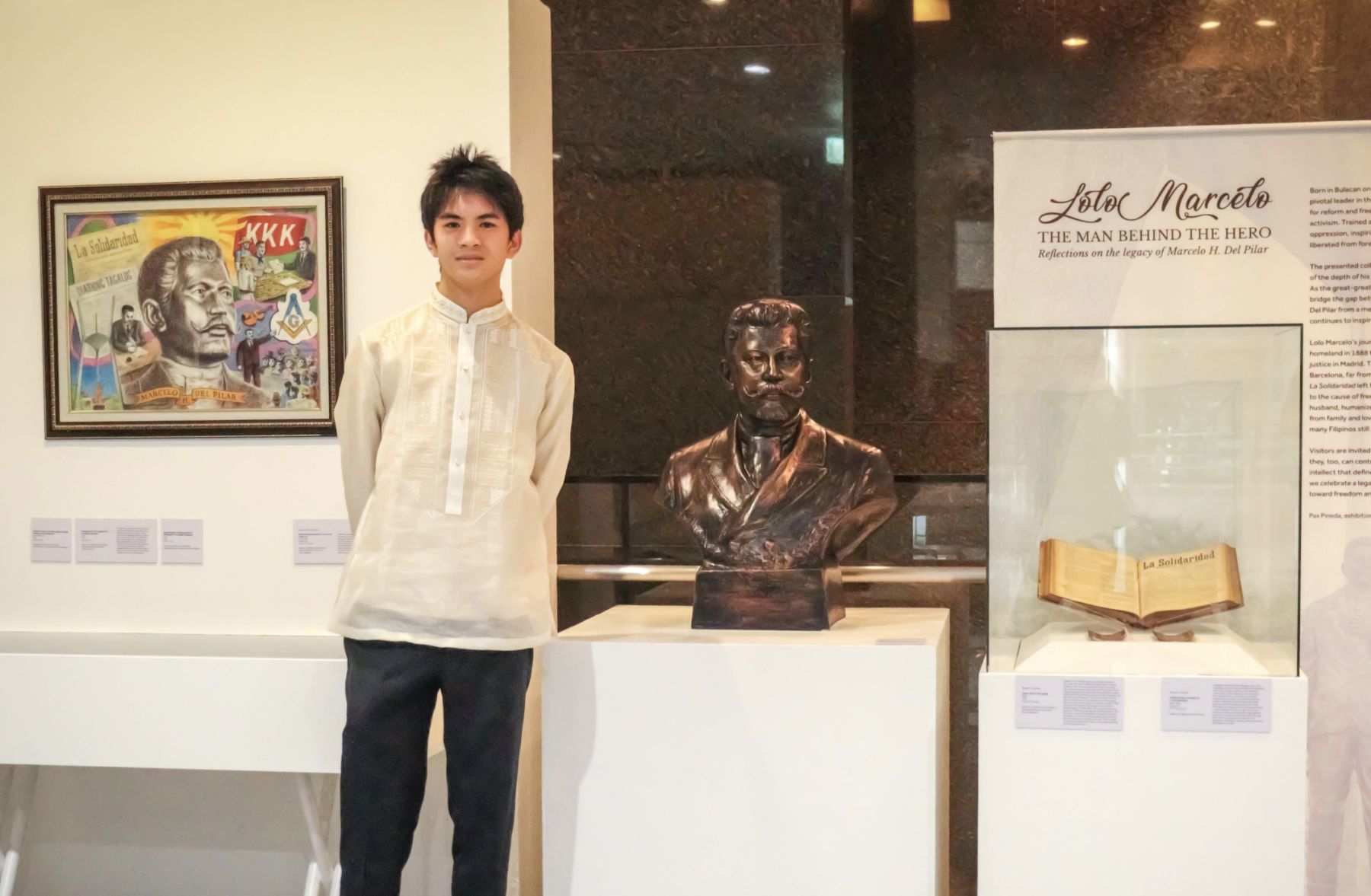
Reframing the legacy of the national icon, the Hong Kong-based Filipino curator highlights the themes of family devotion, immense sacrifice, and the deep personal cost that came with his revolutionary patriotism.
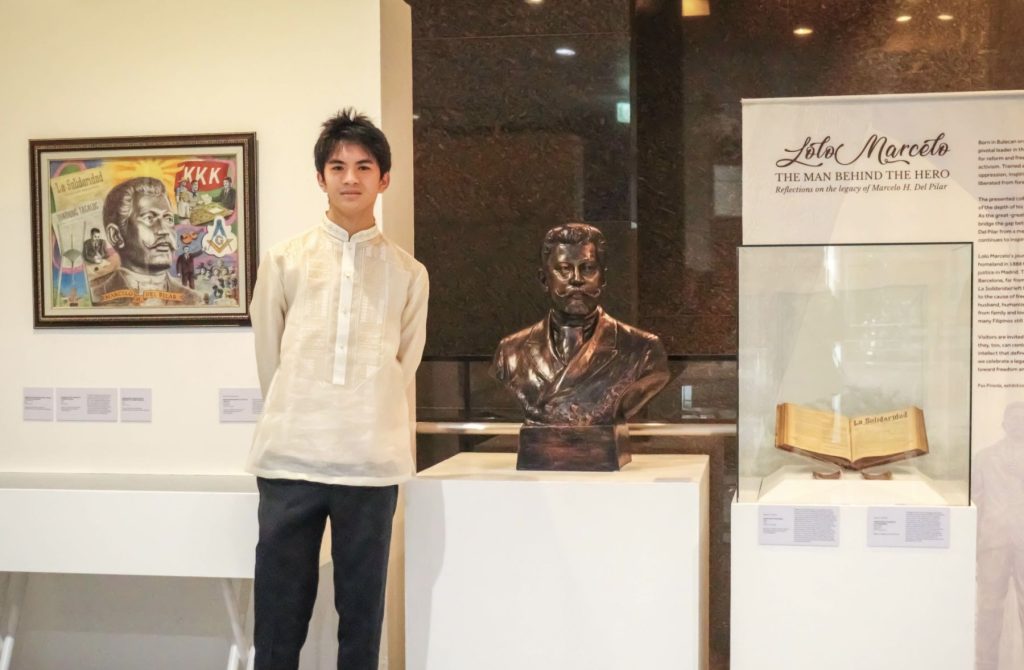
Delving past the typical history textbook narratives, 17-year-old Pax Pineda is examining the life of his great-great-great-grandfather, Marcelo H. Del Pilar, from an intimate perspective. His latest focus shifts away from pure politics to understand Del Pilar as a family man who bore an extraordinary personal burden for his country.
In his debut exhibition, MARCELO: THE MAN BEHIND THE HERO (Reflections on the Legacy of Marcelo H. Del Pilar), Pineda shines a spotlight on the heavy emotional and personal toll of the hero’s revolutionary path. Art enthusiasts and history buffs can view the collection from September 4 to October 17, 2026, hosted at the 2F Lobby of the Ayala Museum’s Diorama Experience Gallery.
Pineda explains that the project was born out of a desire to look beyond traditional historical texts. “Often, history books shroud our heroes behind a dense wall of specific publications, dates, and political actions,” he remarks. By exploring Del Pilar through the lens of family ties, deep personal loss, and immense sacrifice, Pineda hopes to help museum visitors connect with the authentic humanity of the iconic figure.
s both a researcher and a descendant of the national hero, Pineda holds a highly unusual perspective. Although his family ties provide a personal investment in the project, he maintained an objective academic approach to the curation, pairing familial passion with disciplined research to ground the showcase firmly in historical facts.
“In traditional classrooms, Lolo Marcelo might at times appear as a static figure on a page—someone who did good things for his country but lacked qualities we can relate to,” Pineda explains. “This exhibition aims to strip away that historical mystery and introduce the actual character of the man. I want visitors to see that, despite his profound, enduring love for his wife and daughters, he was willing to sacrifice his happiness. He sacrificed the comforts of family life for a slim chance at building something beautiful: the very nation we inherit today.”
In addition to historic revolutionary works like Dasalan at Tocsohan and La Solidaridad, the display includes private letters showcasing Del Pilar’s active, loving role as a father to Sofia and Anita from thousands of miles away. Pineda notes that these records counter any assumption that the hero’s absence equaled a neglect of family duties. Instead, the documents reveal a caring man who willingly tolerated extreme poverty, loneliness, and homesickness to fight for the future of both his homeland and his children.
By linking history to the present, the exhibition highlights the parallels between Del Pilar’s hardships abroad and the modern Filipino diaspora. Pineda, who grew up in Hong Kong, notes that his ancestor’s struggle reflects the lives of millions of overseas Filipinos today who live apart from their families to support them from afar.
Instead of memorizing dates and facts, Pineda wants young Filipinos to view history with a sense of sympathy. While their ancestors’ specific tasks might seem unfamiliar today, the underlying values are deeply relatable. As Pineda puts it, “Young people might not relate to editing a reformist newspaper, but they absolutely understand love, homesickness, and standing up for what is right.”
MARCELO: THE MAN BEHIND THE HERO (Reflections on the Legacy of Marcelo H. Del Pilar) is co-presented by the Ayala Museum and the National Historical Commission of the Philippines.