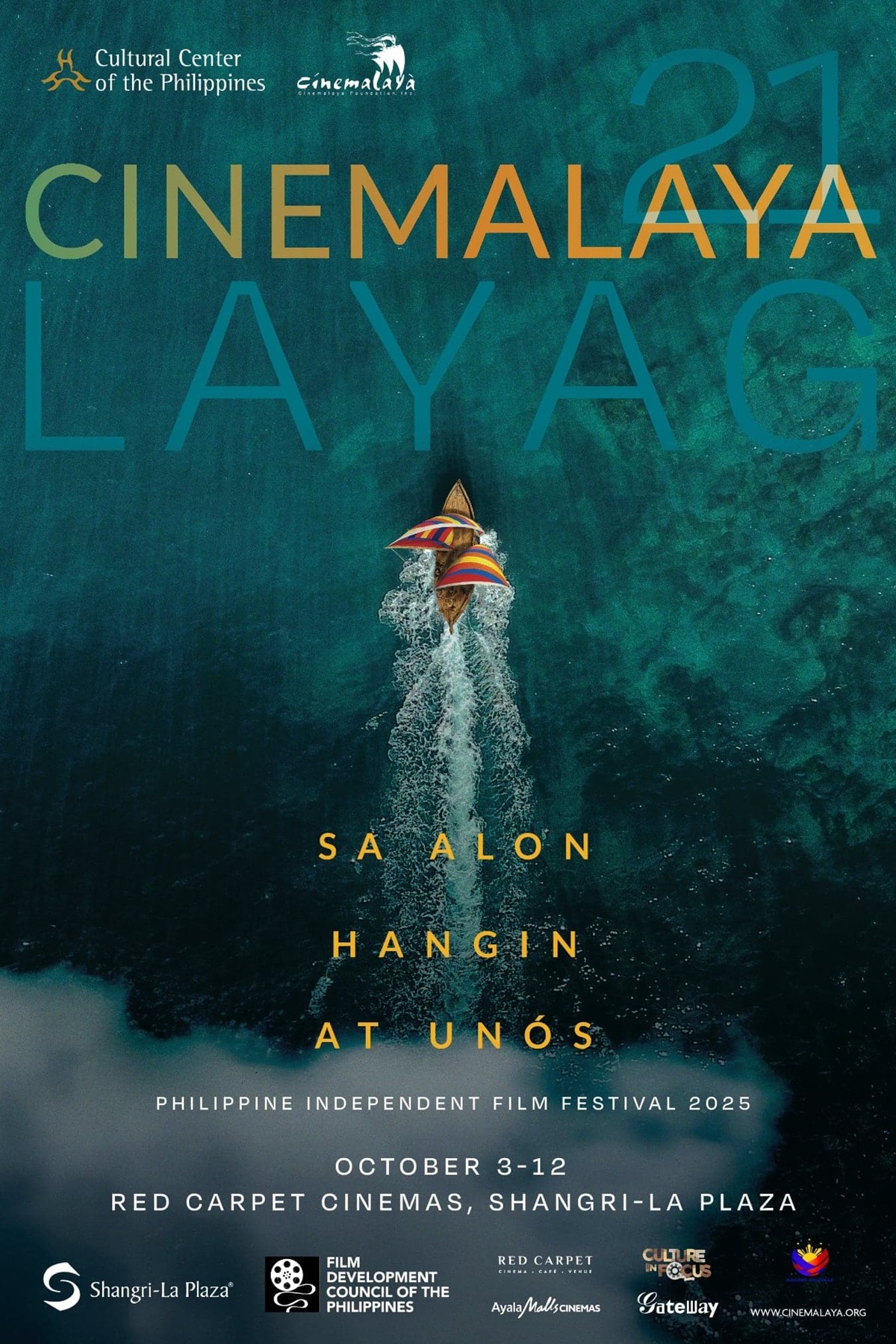
Since 2005, the Cinemalaya Philippine Independent Film Festival has been home to bold, brave, and heartfelt storytelling. Now on its 21st edition, the festival continues to champion regional voices — filmmakers who bring to life stories in their local languages, rich in cultural depth and authenticity.
Among this year’s Short Film Finalists are regional entries that highlight how Filipino creativity thrives beyond the city:
- Kung Tugnaw ang Kaidalman Sang Lawod by Seth Andrew Blanca
- Hasang by Daniel de la Cruz
- Figat by Handiong Kapuno
- Kay Basta Angkarabo Yay Bagay Ibat Ha Langit by Maria Estela Paiso

These four shorts are part of the ten films competing in Cinemalaya 21 Shorts, each presenting a unique blend of folklore, reality, and emotion.
Folklore Meets Reality in Regional Cinema
With three years of experience working at sea, Blanca crafted Kung Tugnaw from stories whispered among seafarers — tales of abuse and isolation often left unspoken.
“Sa barko, may mga usapan about sexual abuse na kadalasan, hindi na naire-report or basta na lang pinapabayaan,” he shared. His film contrasts the vast loneliness of the sea with sweeping visuals from his hometown, Igbaras, Iloilo — a haunting yet poetic portrayal of invisible lives at sea.

From the same province comes De la Cruz’s Hasang, inspired by a local belief that the spirits of the dead take the form of animals or insects. Set in Guimbal, Iloilo, the film follows a boy who witnesses his grandmother’s spirit transform into a tilapia.
“It’s about how connection transcends life and death,” he explained. “I cast local actors from Guimbal to bring our daily life and culture closer to audiences.”

Meanwhile, Kapuno’s Figat honors his Kalinga roots and the fading traditions of his people. Growing up, he would hike for hours just to reach the rivers where he swam as a child. “Parang napaka-disconnected na ng mga bata ngayon,” he observed. Through the story of Ching-ay, a young girl crafting a traditional Kalinga instrument, he hopes to reignite appreciation for indigenous culture and artistry.

In Zambales, Paiso’s Kay Basta channels both grief and outrage over territorial disputes in the West Philippine Sea. “Nalaman kong sinasadya ng Disney na lagyan ng nine-dash line ang mga mapa sa mga pelikula nila para mas bumenta sila sa China. Umigting din ‘yong Balikatan exercises,” she said.
Her short, featuring a half-human, half-fish named Sita, weaves the voices of Zambales fishermen with animation and surreal imagery — a visceral statement on sovereignty and survival.
Filmmaking as Protest, Healing, and Preservation
Paiso’s film, though difficult to fund due to its animation sequences, stays true to her conviction.
“Ang kuwento ng mga mangingisda ng Zambales ay hindi dapat kinakaawaan,” she emphasized. “Pinagmumulan dapat ito ng galit at panawagang tayo dapat ang nakikinabang sa likas na yaman ng Pilipinas.”
Blanca, too, anchors his storytelling on empathy. “Beyond the analog horror, gusto kong maramdaman ng audience ang empathy para sa mga seafarers — mga buhay na madalas invisible sa dagat,” he said.
De la Cruz, on the other hand, embraces the absurd to explore grief and the environment. “I hope audiences feel connected to the small moments that remind us what’s at stake in preserving our world,” he shared.
And for Kapuno, making Figat was an act of cultural preservation despite challenges. “Literal siyang indie (hindi) madali,” he joked, adding, “Through Figat, I want people to see a life still intertwined with the music and stories of our land.”
Carving Space for Regional Cinema in the National Spotlight
Under the theme Layag: sa Alon, Hangin, at Unos, Cinemalaya 21 continues to uplift regional artists who prove that powerful cinema thrives outside Metro Manila.
“P’wedeng-p’wede pala sumali sa Cinemalaya with an all-indigenous cast and crew,” said Kapuno, who hopes to inspire fellow Cordilleran filmmakers to tell stories that honor their heritage.
For Blanca, having Kung Tugnaw in Cinemalaya feels “surreal.” “Being a regional filmmaker isn’t a limitation,” he said. “Gamitin ‘yong sariling dialect, kultura, at environment — that’s our strength.”
Paiso, returning to Cinemalaya after her 2022 entry Ampangabagat Nin Talakba Ha Likol, reflected on her journey. “High school pa lang ako, mulat na ako sa eksena ng filmmaking dito sa bansa dahil sa Cinemalaya,” she said.
For De la Cruz, being part of the festival is both a milestone and a homecoming: “I truly believe that within our community lie countless stories that deserve to be told — so I’ll always choose Guimbal.”
Cinemalaya: A Continuing Celebration of Courage and Creativity
For over two decades, Cinemalaya has amplified voices that challenge, comfort, and change. For regional filmmakers like Blanca, De la Cruz, Kapuno, and Paiso, being seen and heard is already a victory — proof that Filipino cinema thrives in every dialect, every island, every storyteller’s heart.
Even without the Balanghai trophy, their greatest triumph is their renewed faith in their craft — and their deep, unwavering love for Philippine cinema.
Catch Kay Basta Angkarabo Yay Bagay Ibat Ha Langit by Maria Estela Paiso, Figat by Handiong Kapuno, Hasang by Daniel de la Cruz, and Kung Tugnaw Ang Kaidalman Sang Lawod by Seth Andrew Blanca from October 3 to 12, 2025, at Shangri-La Plaza, Ayala Malls Cinemas, and Gateway Cineplex 18.
For updates, visit the CCP website (www.culturalcenter.gov.ph), Cinemalaya.org, and follow the official pages of CCP and Cinemalaya on X, Instagram, and TikTok.