Recent energy shocks and devastating natural disasters in early 2026 have heightened the urgency of climate action. For the Philippines, one of Southeast Asia’s most climate-vulnerable economies, the challenge is to translate low-carbon ambitions into faster, measurable, and collective action.
For Unilever, climate action is integrated into its business operations, from managing risks and improving operational efficiency to strengthening supply chain resilience.
Scaling Decarbonization: From Operations to the Supply Chain
At the operational level, Unilever has established a science-based target to achieve a 100% reduction in absolute Scope 1 and 2 greenhouse gas (GHG) emissions by 2030, using 2015 as its baseline. By the end of 2025, Unilever Philippines had already reduced its Scope 1 and 2 emissions by 77% compared with that baseline.
This progress has been driven by early investments in renewable energy, which have generated cost efficiencies and helped shield the business from energy market volatility. In 2019, Unilever Philippines shifted to 100% renewable grid electricity through geothermal energy and has since expanded its efforts by installing rooftop solar panels across its facilities.
The company has also electrified selected thermal processes in its factories using technologies such as heat pumps and electric boilers. In addition, it has committed to transitioning its owned fleet to 100% hybrid electric vehicles by 2030.
Recognizing that much of its climate footprint comes from across its value chain, Unilever Philippines is also working closely with suppliers to accelerate Scope 3 emissions reductions. Through its global Supplier Climate Programme, the company engages priority suppliers and provides tools and resources to help them measure, report, and ultimately reduce their GHG emissions.
Further strengthening these efforts, Unilever Philippines renewed and expanded its partnership with First Gen in September 2025 to bring renewable energy supply to priority sites and suppliers across Metro Manila, Cavite, Laguna, and Batangas. The partnership extends the benefits of cost efficiencies while advancing the company’s supply chain decarbonization journey.
A Shared Principle on Collective Action
These initiatives underscore a broader principle: achieving a low-carbon transition and a net-zero future requires partnerships that enable coordinated action across different sectors.
This commitment has led Unilever Philippines to become one of the inaugural members of the Net Zero Carbon Alliance (NZCA), an organization that brings together cross-sector stakeholders to advance decarbonization in the Philippines.
At the recent NZCA Philippine Net Zero Conference 2026, business leaders, policymakers, financiers, and sustainability practitioners gathered to chart the country’s transition toward a low-carbon economy. Discussions centered on strengthening corporate leadership and governance, financing the transition, developing capabilities, advancing policy, and turning net-zero commitments into measurable results.
Unilever Philippines Sustainability Manager Regina Unson-Silerio emphasized the importance of integrating sustainability throughout the business instead of treating it as a separate organizational function.
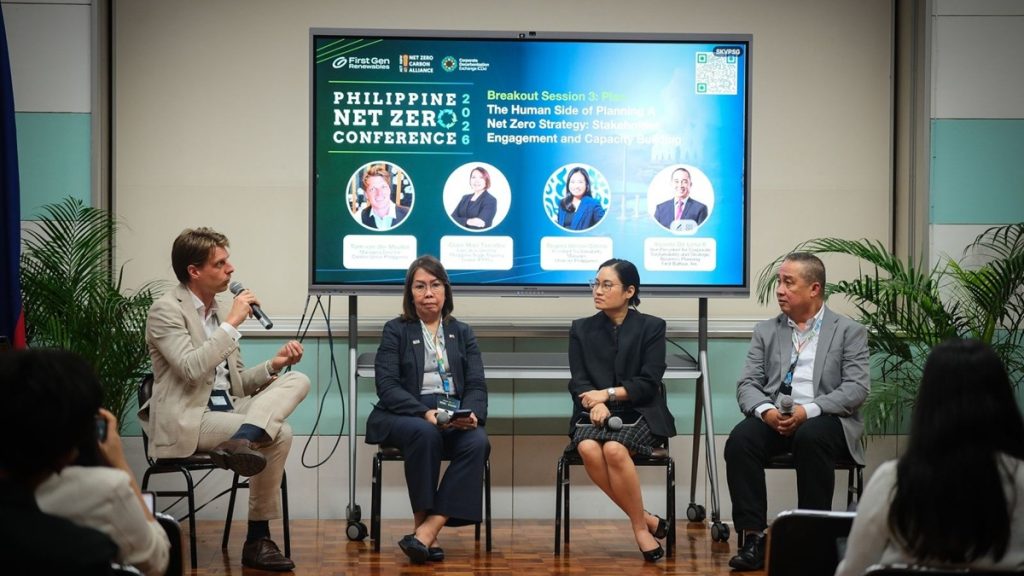
“Sustainability has to be embedded across the business, with clear ownership and accountability from the functions that can turn strategy into action. Whether it is about renewable energy, lower-carbon materials and ingredients, logistics improvements, supplier decisions, capital investments, or product specifications, these decisions shape how we operate, innovate, and grow the business.”
Continuing the Journey Toward Net Zero

For Unilever Philippines, the journey to net zero is both an operational priority and a collective undertaking. Alongside its 2039 targets and value-chain initiatives, the company continues to collaborate with industry peers, government agencies, and trade associations to help create an enabling environment for corporate climate action.
In 2027, Unilever Philippines will celebrate 100 years of making a positive impact on communities nationwide. This legacy has been built through well-loved household brands such as Dove, Knorr, Surf, Rexona, and many others that help make everyday life better.
As the company approaches this milestone, it remains committed to driving positive change for society and the environment through innovation, sustainability, and purpose-led growth.