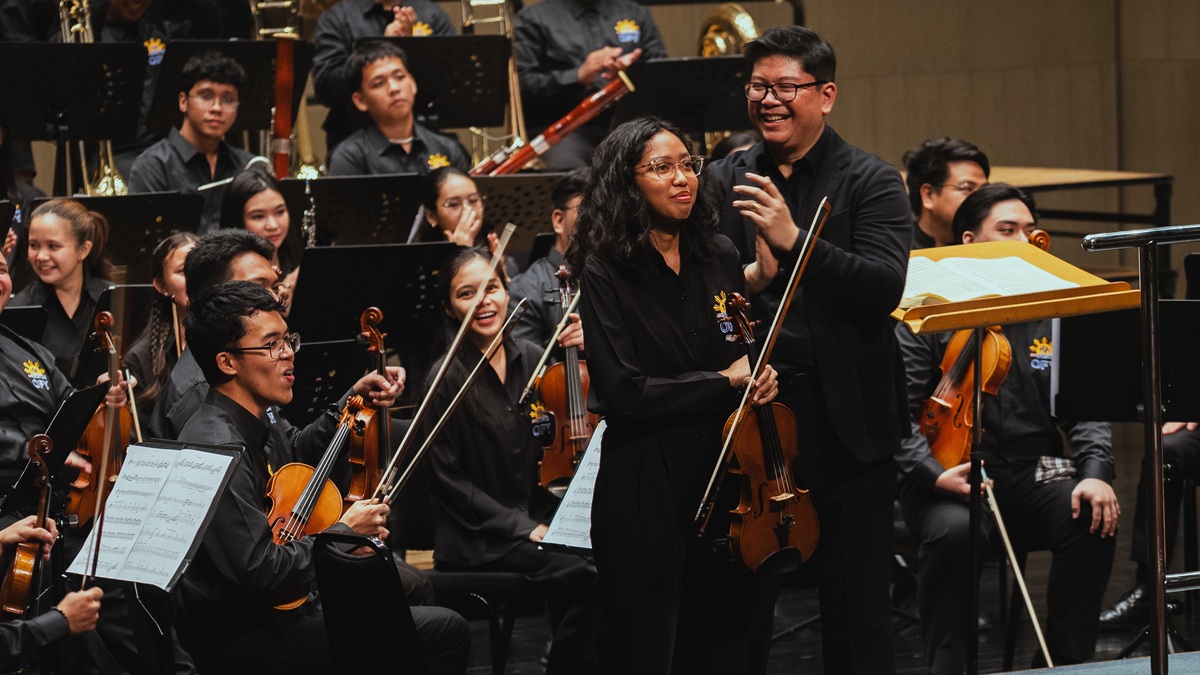
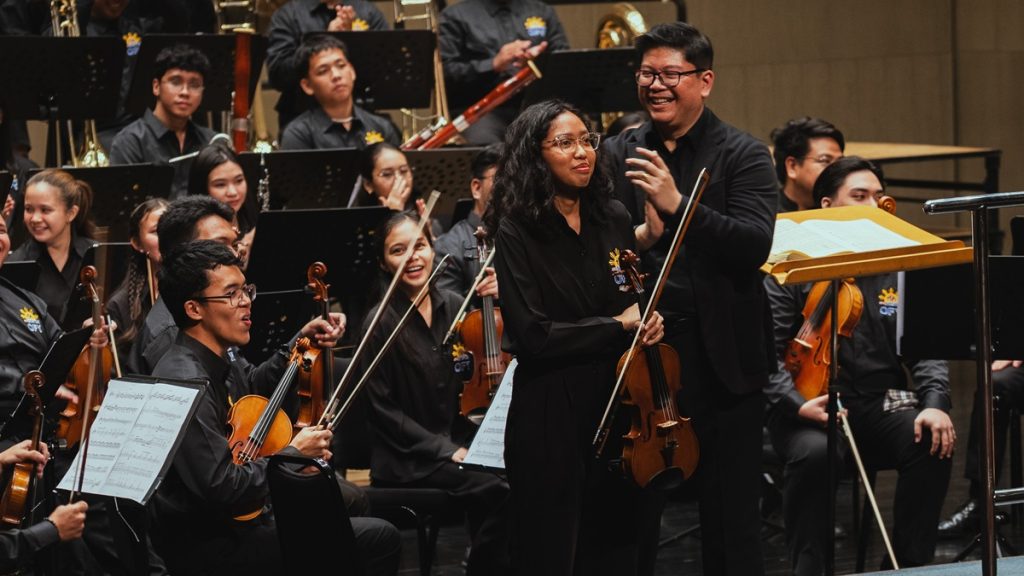
Kaya Mendoza’s journey with music began quietly in a classroom—but what started as a simple introduction to melody soon evolved into a life shaped by purpose, discipline, and a deep desire to connect with others.
A scholar of the Cultural Center of the Philippines (CCP), Mendoza has grown into both a dedicated performer and a passionate educator, navigating the delicate balance between the stage and the classroom with intention and heart.
From early notes to a lifelong calling
Mendoza first picked up the violin at just nine years old through a group class at the Kolisko Waldorf School, under the guidance of Ford Pundamiera. What began as part of her curriculum quickly became something more—an artistic path she would continue to pursue with increasing depth.
Her musical journey took shape further at the Philippine High School for the Arts in Makiling, where she trained under mentors Sergio Esmilla and Gina Medina-Perez. Driven by a growing curiosity and commitment to her craft, she later pursued music education at the University of the Philippines Diliman, where she continues her studies under Dino Decena.
For Mendoza, music has always been about connection. Whether performing locally or abroad—such as in Kuala Lumpur with the Orchestra of the Filipino Youth—she discovered the power of music to bridge people, emotions, and experiences.
Balancing performance and purpose
Over the years, Mendoza has performed with some of the country’s most respected ensembles, including the ABS-CBN Philharmonic Orchestra and the Philippine Philharmonic Orchestra. Yet alongside her performance career, another calling steadily grew: teaching.
When the pandemic disrupted live performances, Mendoza pivoted—participating in virtual concerts and volunteering in initiatives like CCP’s Hands-On Choral Workshop. What began as a response to limitations became a defining part of her identity.
Teaching, for her, is not separate from performing—it is an extension of it. Each performance becomes a source of insight she can pass on to her students, reinforcing her belief that learning in music is continuous and shared.
Expanding access, shaping futures
Mendoza’s advocacy is rooted in accessibility. She believes that music education should not be limited by background or status, and she actively works toward creating inclusive learning spaces for aspiring musicians.
As a CCP scholar, she carries a strong sense of responsibility—not only to refine her artistry but to give back to the community that supports her journey. Recognizing that her education is publicly funded, she approaches her work with accountability, discipline, and gratitude.
Beyond performing and teaching, she has also explored production work and workshop facilitation—broadening her understanding of music as both an art form and a platform for impact.
A life in harmony
Looking ahead, Mendoza envisions a future where music intersects with other disciplines. Her capstone project, Titik at Tinig, reflects this vision—exploring how music can be used as a tool for literacy and learning.
She also aspires to collaborate with fellow artists while pursuing her goal of becoming a licensed professional music educator—continuing to inspire, mentor, and create.
At the core of her journey is a simple but powerful truth: music is both a personal and communal experience. Whether on stage or in the classroom, Mendoza embraces both roles fully—finding meaning in the exchange between artist and audience, teacher and student.
Her name, “Kaya,” meaning “can,” feels especially fitting. It speaks not only to her capability, but to the boundless possibilities ahead—proof that passion, when nurtured with purpose, can resonate far beyond the first note.