JAKARTA, Indonesia — Public Relations Society of the Philippines (PRSP) President Ana Pista, APR, urged next-generation communicators to embrace the tech evolution during her keynote address at the Konvensi Humas Indonesia (KHI). Speaking to an audience of students and aspiring PR practitioners, Pista tackled the growing anxiety regarding career longevity in the age of artificial intelligence.

In her address, titled “Don’t Fear Disruption. Lead It,” she challenged young professionals to move past the initial wave of uncertainty and instead focus on proactive adaptation to stay ahead of market demands.
“Adapt. Upskill. Lead,” Pista emphasized, outlining a strategic three-pronged approach to navigating a communications landscape where automated tools are rapidly redefining day-to-day operations and traditional job titles. Her perspective brought a crucial regional outlook to the KHI, a premier international gathering that unites Southeast Asian government officials, private corporate leaders, and academics to debate the future of media.
Ultimately, Pista’s message underscored a borderless challenge facing the entire industry: training a modern workforce that can successfully balance automated efficiency with irreplaceable human insight.
The challenge starts before the first job

The advent of artificial intelligence is fundamentally altering the traditional career runway for junior communications professionals. Historically, entry-level roles served as a foundational training ground where newcomers mastered core mechanics like background research, drafting media materials, and content writing under senior mentorship. Today, automated tools can execute these task-oriented duties in a fraction of the time, boosting agency productivity but leaving an ambiguous gap in how fresh graduates will cultivate the professional intuition and localized storytelling judgment traditionally forged through these routine assignments.
Addressing these structural shifts during her presentation, Pista cited compelling industry data highlighting AI-driven workforce restructuring, entry-level hiring freezes, and the rapid automation of entry-level workloads. She confronted the audience with two critical questions: How confident are they in securing their desired career paths, and for those already in the field, how confident are they in maintaining their relevance? This dilemma is particularly urgent in the Philippine media landscape, where corporate tech adoption is forcing job seekers to quickly realign with aggressively changing employer expectations.
Ultimately, Pista emphasized that the true challenge lies not in locked competition with machines, but in recognizing which technical skills are losing value in isolation. While proficiency with generative AI platforms is an essential baseline, the modern communicator’s true competitive edge rests in advanced capabilities that technology cannot replicate. True professional value now hinges on high-level human oversight: the ability to detect factual hallucinations, identify nuanced cultural missing links within a narrative, and make the responsible, ethical judgment calls necessary to protect public trust.
Beyond learning to use AI
Pista identified fear as a primary barrier to professional growth, acknowledging valid fears regarding career obsolescence and whether advanced systems might surpass human capabilities. Rather than dismissing these systemic worries, the Public Relations Society of the Philippines (PRSP) president encouraged aspiring communicators to completely reframe their perspective on technological disruption. Her core directive was straightforward: do not fear change, but actively seek to lead it.
This proactive stance does not mean ignoring structural risks or assuming a smooth transition for the workforce. Instead, it demands a deliberate pivot away from highly repetitive, automatable tasks and toward high-level strategic contributions. For modern media professionals, long-term career resilience hinges on mastering uniquely human skills that automated platforms cannot replicate—such as rigorous information assessment, deep audience empathy, strategic campaign mapping, and authentic relationship building. These responsibilities require nuanced judgment and contextual awareness rather than the mere speed of content generation.
Furthermore, Pista highlighted a volatile media ecosystem characterized by fragmented digital platforms, a blurring of lines between marketing and public relations, and a widespread decline in public trust fueled by artificial misinformation. In this challenging environment, increasing the sheer volume of output does not equate to effective communication.
Moving forward, the ultimate premium will be placed on unwavering credibility and factual precision. As AI makes generic text easier to produce than ever before, the human responsibility to verify information and communicate transparently remains the ultimate safeguard for public trust.
Why this matters to Filipino workers

The profound questions raised by Pista in Jakarta resonate far beyond the borders of the public relations sector. Professionals across diverse fields in the Philippines are currently navigating identical crossroads as corporations aggressively evaluate how machine learning tools can optimize operational workflows. Consequently, national workforce readiness has taken center stage in public dialogues surrounding digital evolution. Government institutions and industry alliances face the complex task of arming the local workforce with cutting-edge technological competencies while ensuring these training frameworks align with real-world corporate demands.
However, the burden of adaptation cannot be placed solely on the shoulders of the labor force. Corporate leadership must deliberately evaluate how they integrate artificial intelligence into their workflows, actively upskill their existing teams, and carve out meaningful pathways for personnel to assume higher-level strategic responsibilities. For fresh graduates, the rapid automation of routine workloads threatens to make entering the professional arena increasingly difficult. Companies will need to intentionally architect new mentorship models to guarantee that entry-level employees can still accumulate practical experience, absorb insights from seasoned executives, and prove their capabilities.
This structural dilemma is uniquely critical for media and communications teams, where foundational drafting and research tasks have historically served as the essential training grounds for tomorrow’s creative directors, editors, and strategic planners. Ultimately, Pista’s directive to pivot and upskill represents just one side of the coin. Adequately preparing for an automated future demands that modern enterprises systematically foster environments where human talent has the psychological safety and structural support to learn, experiment, and grow.
Cross-border insights for a shared ASEAN future
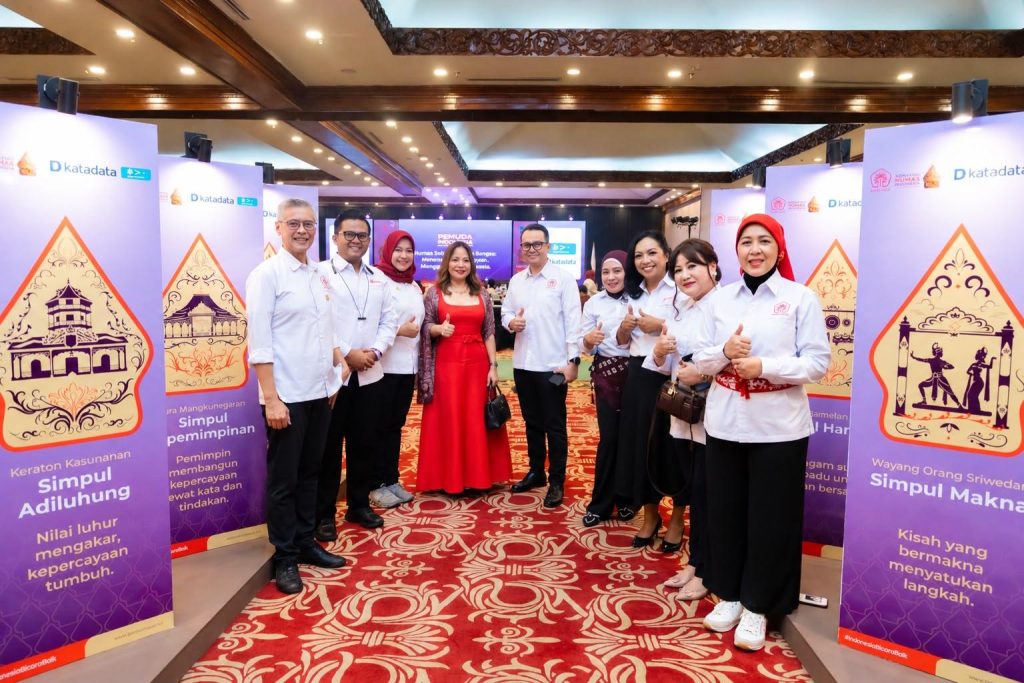
The critical value of cross-border dialogue was reinforced by Boy Kelana Soebroto, PERHUMAS Chairman and Global Alliance for Public Relations and Communication Management Board Member, who expressed his appreciation for Pista’s engagement with Indonesia’s next-generation communicators. Soebroto pointed out that the strategic steps taken by the Philippines offer vital blueprints for Indonesian media practitioners.
As both developing economies confront the sweeping impacts of artificial intelligence, digital transformation, and widespread industry upheaval, analyzing how Philippine corporations are training young talent serves as an excellent benchmark for the broader ASEAN region. This high-level exchange underscores an urgent need for closer regional solidarity. Because the technological disruption threatening young professionals knows no borders, Southeast Asian leaders are calling for enhanced knowledge-sharing networks and unified strategic frameworks across ASEAN to guarantee the next generation is fully empowered to adapt, upskill, and lead.
A future built through collaboration

This focus on regional solidarity closely mirrors another central theme of the forum: the critical need for cross-disciplinary collaboration as traditional professional boundaries continue to blur. Modern communications practitioners can no longer operate in isolation from technical development, digital marketing, and core business operations. Gaining a comprehensive understanding of how these distinct fields intersect is vital to helping media professionals dynamically adapt to changing consumer expectations and maximize the utility of emerging tools.
For Pista, systemic technological disruption can also serve as a powerful catalyst that brings invaluable human traits to the forefront: a relentless willingness to learn, an agile capacity to adapt, the creative imagination to engineer fresh solutions, and the professional courage to step into uncharted territory. She reminded the assembly that throughout history, human workers have repeatedly adjusted to major industrial shifts, developed innovative ideas, and rebuilt operational frameworks when older methods became obsolete. Her perspective underscores a fundamental truth about the future of employment: while technology will inevitably change day-to-day tasks, the ultimate trajectory of that change depends entirely on the strategic decisions made by individuals, corporate employers, and public institutions.
Pista, who additionally serves on the board of the Global Alliance for Public Relations and Communication Management, emphasized that her dedication to next-generation advocacy is deeply intertwined with how she defines her own professional legacy. For her, a meaningful legacy is not measured by administrative titles, executive positions, or corporate accolades. Instead, it is defined by the practical knowledge shared, the structural doors opened, and the career opportunities created for the emerging talent who will eventually inherit the industry.
This philosophy lends her keynote address a deeply practical dimension that extends far beyond the immediate anxieties surrounding artificial intelligence. Equipping the next generation requires much more than simply advising young professionals to keep pace with digital trends; it demands that organizations actively help them build the high-level critical thinking, personal confidence, and real-world experience needed to forge resilient careers. For aspiring Filipino communicators entering this highly automated ecosystem, the professional hurdle is undeniably real. Yet, Pista’s ultimate message in Jakarta remained definitive: the objective is not to halt the wave of disruption, but to possess the tools and readiness to actively shape what comes next.