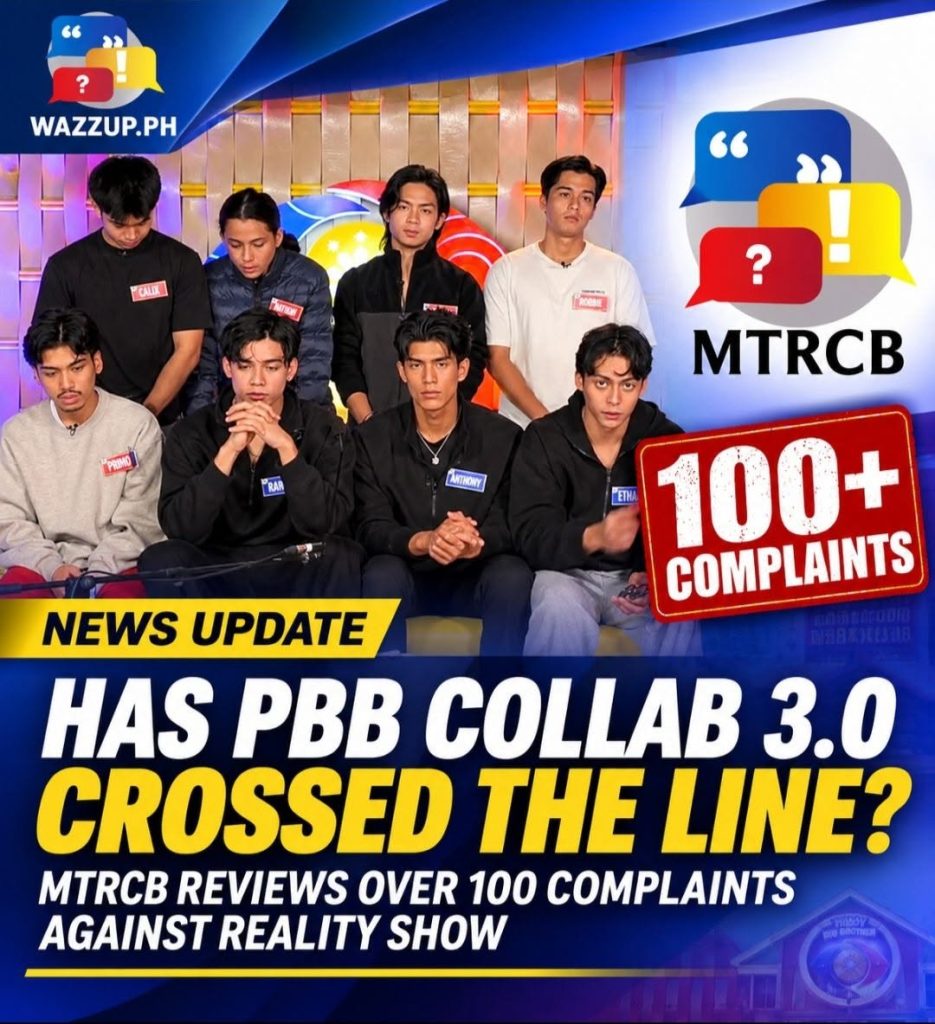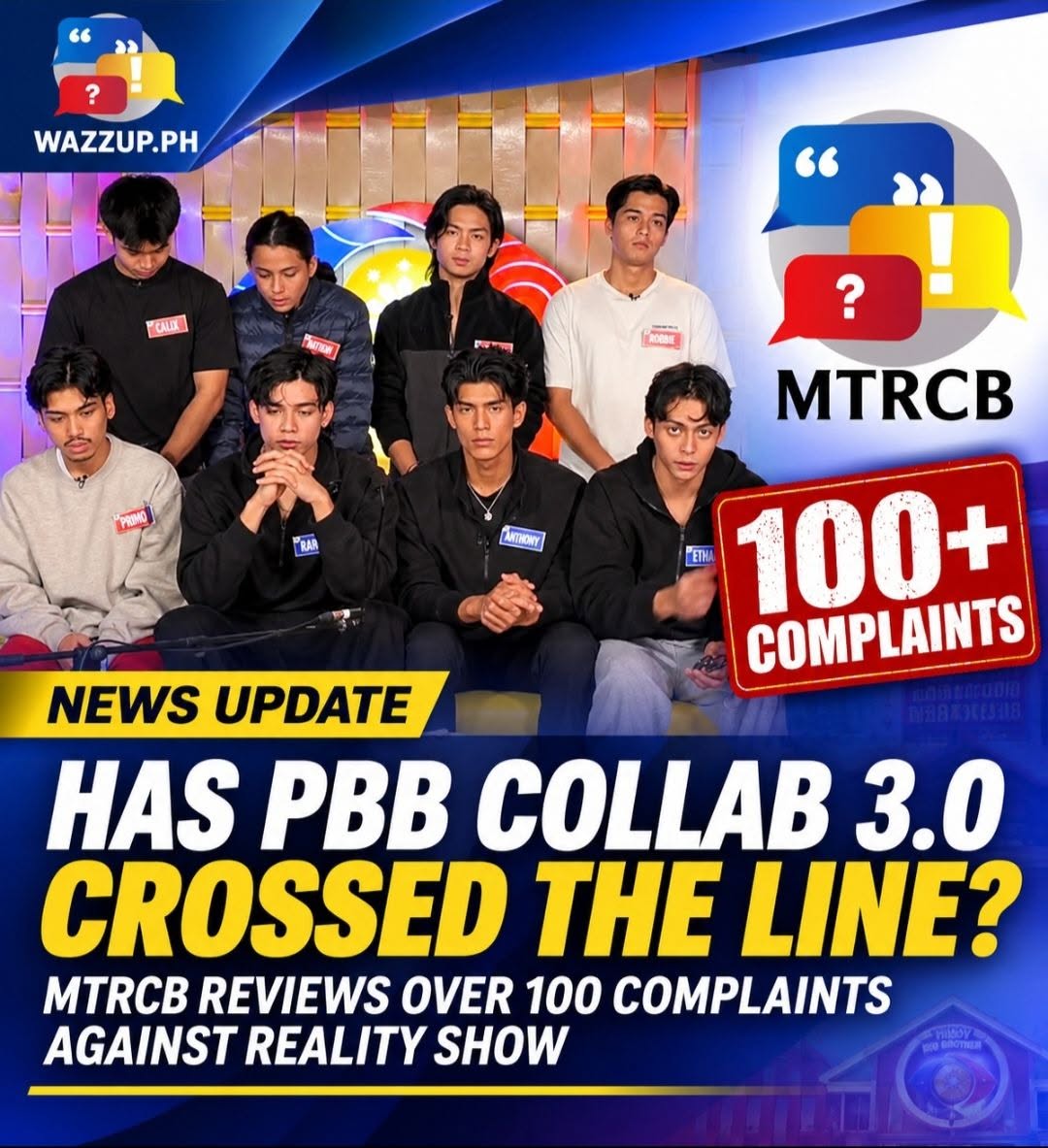
More than 100 complaints in just a few days have placed Pinoy Big Brother (PBB) Collab 3.0 under the scrutiny of the Movie and Television Review and Classification Board (MTRCB), raising questions about the boundaries of reality television, responsible programming, and the standards expected of a show watched by a diverse audience.
In an official statement, the MTRCB confirmed that it is looking into scenes and interactions featured in recent episodes of the reality television program following the complaints received from viewers.
The Board said it would discuss the concerns with the show’s production team as part of its review. In the meantime, it reminded PBB management to exercise greater care in ensuring that every episode complies with the guidelines governing the show’s assigned age classification.
While the MTRCB has yet to announce any final findings, the growing number of complaints has brought the program’s content and production decisions into the spotlight.
WHEN ENTERTAINMENT BECOMES A REGULATORY CONCERN
Reality television thrives on human interaction. Conflict, emotional exchanges, disagreements, and unexpected situations are often part of what keeps audiences watching.
But there is a distinction between creating compelling television and pushing content beyond what is appropriate for its intended audience.
This is where the responsibility of a production team becomes particularly important.
A reality show may be designed to capture spontaneous moments, but its producers still exercise editorial and production control over what eventually reaches television audiences. The fact that a scene happens inside a reality show does not automatically exempt it from standards governing broadcast content.
The question, therefore, is not whether reality television should be free from controversy. Controversy is often part of the format. The more important question is whether the content being presented remains consistent with the program’s classification and the standards expected by regulators.
100 COMPLAINTS: PUBLIC FEEDBACK THAT CANNOT SIMPLY BE DISMISSED
The number of complaints deserves attention, but it must also be understood in the proper context.
A hundred complaints do not automatically establish a violation. Neither should public criticism alone determine whether a television program deserves sanctions.
Nevertheless, such a volume of feedback signals that a segment of the viewing public has serious concerns about what it has seen.
For broadcasters and television producers, audience reaction should not be treated merely as a public relations problem to manage. It can also serve as an opportunity to examine whether their creative decisions are consistent with their responsibilities.
The MTRCB, on the other hand, must distinguish between legitimate regulatory concerns and disagreements arising simply from differing personal standards or preferences.
Its assessment should be anchored in the actual scenes, applicable regulations, and the program’s assigned classification—not merely in the number or intensity of complaints.
THE MTRCB MUST DO MORE THAN ISSUE A REMINDER
The regulatory challenge now rests with the MTRCB.
Its responsibility is not simply to respond whenever a controversial television segment becomes a trending topic. It must demonstrate that its review process is impartial, consistent, and grounded in established rules.
If violations are established, the appropriate regulatory action should follow. If the questioned scenes are found compliant, the Board should also make that determination clear to the public.
Transparency matters because regulatory credibility depends not on how quickly an agency reacts to public pressure, but on how fairly and consistently it applies the rules.
PBB management, meanwhile, should view this development as an opportunity to reassess its content standards, production decisions, and internal review mechanisms.
THE PROFILER’S TAKE: RATINGS SHOULD NEVER OUTWEIGH RESPONSIBILITY
There is nothing wrong with producing entertaining, provocative, and emotionally engaging television. Reality shows are meant to capture attention, generate conversations, and keep viewers invested.
But entertainment should never become an excuse to disregard responsibility.
The success of a television program should not be measured solely by ratings, online engagement, trending hashtags, or the controversy surrounding its episodes. The responsibility to respect viewers and comply with established content standards must remain equally important.
At the same time, regulators must be careful not to equate controversy with wrongdoing. Public outrage is not a substitute for evidence, just as popularity should not shield a program from legitimate scrutiny.
The real issue here is accountability.
If PBB Collab 3.0 has crossed a regulatory boundary, the production team must answer for it. If it has not, the MTRCB must explain its findings with the same clarity expected of the program’s management.
Ultimately, the issue is bigger than one reality show. It is about the kind of television environment the industry wants to create and the standards it is willing to uphold.
Because when entertainment enters millions of homes, responsibility must come with the spotlight.