When Filipino athletes step onto the international stage in Japan, they will be carrying more than the Philippine flag.
They will also be carrying a story of heritage, freedom and Filipino craftsmanship—through the latest creation of renowned fashion designer Francis Libiran.
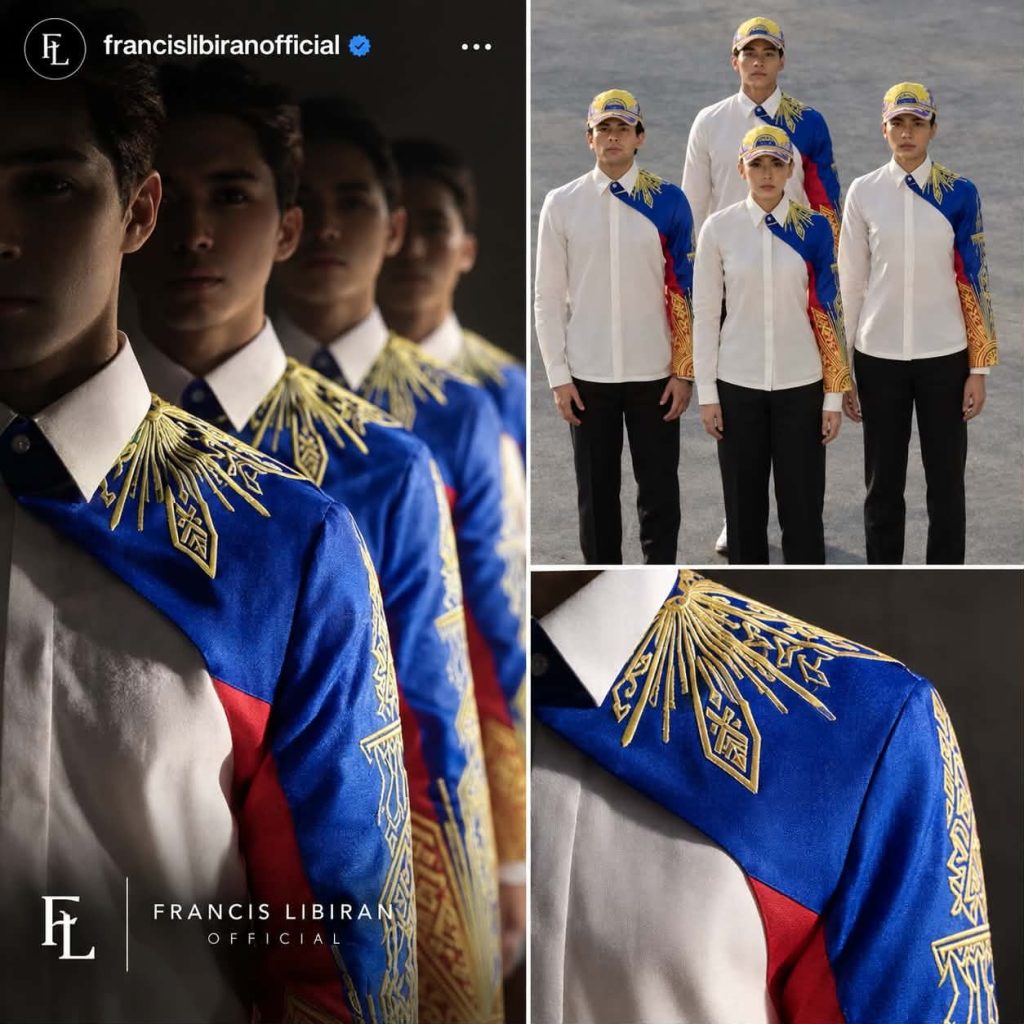
Dubbed “Malaya,” Libiran’s newest barong serves as the official attire of the Philippine delegation for the 2026 Asian Games in Aichi-Nagoya, Japan, happening from September 19 to October 4.
The design takes the traditional Barong Tagalog and gives it a distinctly contemporary character while retaining elements deeply rooted in Philippine culture.
Made using piña-jusi fabric, the barong features the colors and rays of the Philippine flag, complemented by intricate embroidery and patterns inspired by the indigenous artistic traditions of the Cordillera region.
At the heart of the design is the word “Malaya,” written in Baybayin—a powerful reference to freedom and Filipino identity.
Libiran also incorporated Kalinga-inspired motifs into the embroidery. These elements are not merely decorative; they give the garment a deeper cultural dimension, connecting the athletes representing the country today with traditions that have endured across generations.
A modern Barong with a Filipino soul
What makes the “Malaya” barong particularly striking is its asymmetrical design.
The clean, cream-colored piña-jusi body is contrasted by a bold blue-and-red sleeve inspired by the Philippine flag, while yellow embroidery runs across portions of the garment. The result is a look that remains unmistakably Filipino while moving beyond the conventional silhouette of the traditional barong.
The accompanying “Malaya Cap” completes the ensemble. It is made from sustainable woven paper designed to evoke the natural texture of rattan, further reinforcing the collection’s connection to Filipino craftsmanship and natural materials.
For Libiran, the project represents another opportunity to use fashion as a way of telling the Filipino story.
The designer described the concept as a combination of heritage and innovation—preserving traditional craftsmanship while introducing a more contemporary composition and silhouette.
From SEA Games to the Asian Games
The “Malaya” barong also continues Libiran’s long association with Philippine national athletes.
Before this latest creation, the designer created several memorable uniforms for Team Philippines, including “The Flag,” “Araw,” and “Agila” for the SEA Games, as well as “Sinag” for the Philippine delegation at the 2024 Paris Olympics.
His work for Filipino athletes has consequently become more than a matter of fashion. Each design has become an opportunity to reinterpret the Barong Tagalog while placing Filipino culture at the center of an international sporting event.
With “Malaya,” that tradition continues.
As Filipino athletes prepare to compete alongside some of Asia’s best, their opening-ceremony attire will make its own statement: that Filipino identity can be traditional and contemporary at the same time.
And when the Philippine delegation enters the Asian Games stage in Nagoya, “Malaya” will not simply be worn—it will represent a country, its heritage, and the pride of a people carried onto the world stage.