
Money has always been more than just currency in Filipino storytelling—it is a powerful narrative force that reflects how people live, struggle, and define success. From family-centered dramas to OFW journeys and rags-to-riches tales, Philippine cinema and television have long shaped how Filipinos perceive earning, spending, sacrifice, and even self-worth.

In the second episode of the Moneygurado docuseries, Metrobank takes a deeper look at these cultural influences through the lens of one of the country’s most respected filmmakers, Joey Reyes.
Titled “Utang sa Pelikula: Self-Worth and Borrowing in the Filipino Context,” the episode explores how decades of storytelling have shaped emotional attitudes toward debt, sacrifice, and financial struggle.
When Stories Shape Financial Mindsets
Known for acclaimed films such as Pahiram ng Isang Umaga, Batang PX, and Kasal, Kasali, Kasalo, Direk Joey Reyes reflects on how Filipino films often frame debt as a symbol of hardship, sacrifice, or even shame. These narratives frequently center on breadwinners, struggling families, and overseas Filipino workers—stories deeply rooted in real-life experiences.
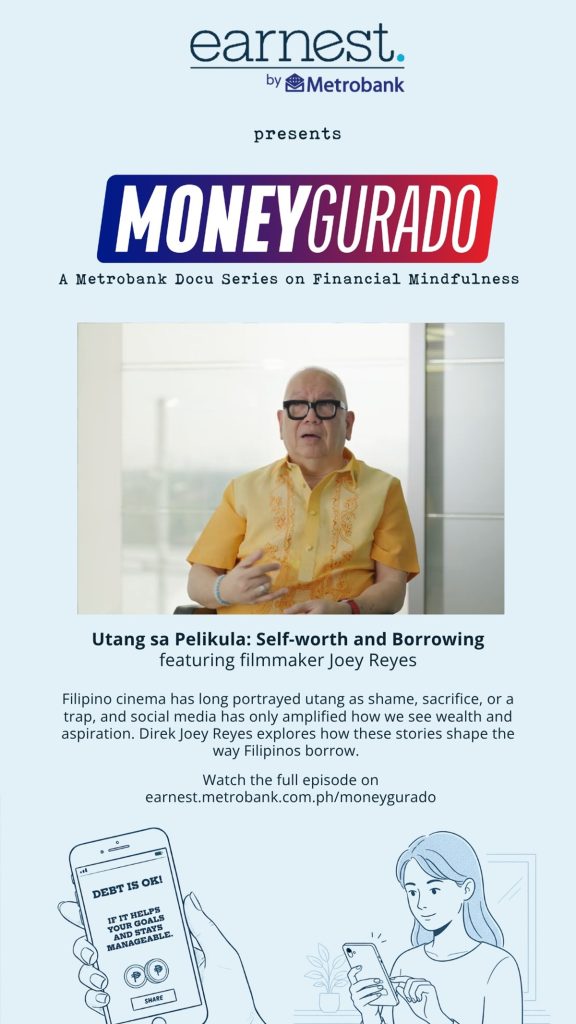
“Films are not just stories—they reflect specific moments in our political, cultural, and spiritual history,” Reyes explains.
While these portrayals resonate with audiences, the episode highlights a critical insight: they may also reinforce limiting beliefs about money. Many Filipinos grow up associating utang solely with burden and embarrassment, often overlooking its potential as a financial tool.
Reframing Debt: From Burden to Opportunity
A key theme in the episode is the need to rethink how borrowing is perceived. Reyes points out that local films rarely depict debt as a strategic resource—something that, when managed responsibly, can support business growth, financial stability, or long-term goals.
“The problem is the lack of education in seeing loans as tools,” Reyes emphasizes. “We are often afraid of them instead of understanding how they can help build financial capability. Can we shift from viewing utang as a trap to seeing it as a tool? Yes—but it requires education.”
While acknowledging the risks of predatory lending, the discussion underscores that responsible borrowing can serve as a legitimate pathway to growth—particularly for entrepreneurs and individuals working toward financial independence.
Changing the Narrative
The episode also examines how cultural narratives quietly influence everyday financial behavior—from spending habits and aspirations to feelings of shame and discipline. For Reyes, the real shift lies not in the amount borrowed, but in the intention and responsibility behind it.
“Hindi yung halaga ng inutang ang importante,” he explains. “Mas mahalaga kung bakit ka umutang at kung paano mo ito binayaran. Doon nagkakaroon ng tunay na halaga ang proseso.”
This reframing, he argues, is a cultural evolution that Filipino storytelling has yet to fully embrace.
A Broader Advocacy for Financial Awareness
Metrobank positions this episode as part of its larger Moneygurado advocacy, which aims to help Filipinos become more intentional, informed, and emotionally aware when it comes to money.
“Financial behavior is deeply personal and cultural,” says Digs Dimagiba, Metrobank Chief Marketing Officer. “Through Moneygurado, we want to spark conversations that help Filipinos understand not just how they manage money, but why they make certain financial decisions.”
Following the first episode, “Kapit Lang: The Filipino Way of Surviving,” which explored resilience through the story of entrepreneur Audrey Cruz, the series continues to dive into the social and cultural dimensions of money.
Future episodes will feature conversations with cultural figures, educators, and experts—further unpacking Filipino mindsets around finance.
Learn, Reflect, and Take Control
Viewers can watch Episode 2 of Moneygurado featuring Direk Joey Reyes here: Watch Moneygurado Episode 2
To support its advocacy, Metrobank’s Earnest platform also offers free financial education resources—empowering Filipinos to make smarter, more informed financial decisions.
In a culture where money stories run deep, Moneygurado invites Filipinos to rethink the narrative—transforming utang from a source of fear into a tool for growth, purpose, and possibility.