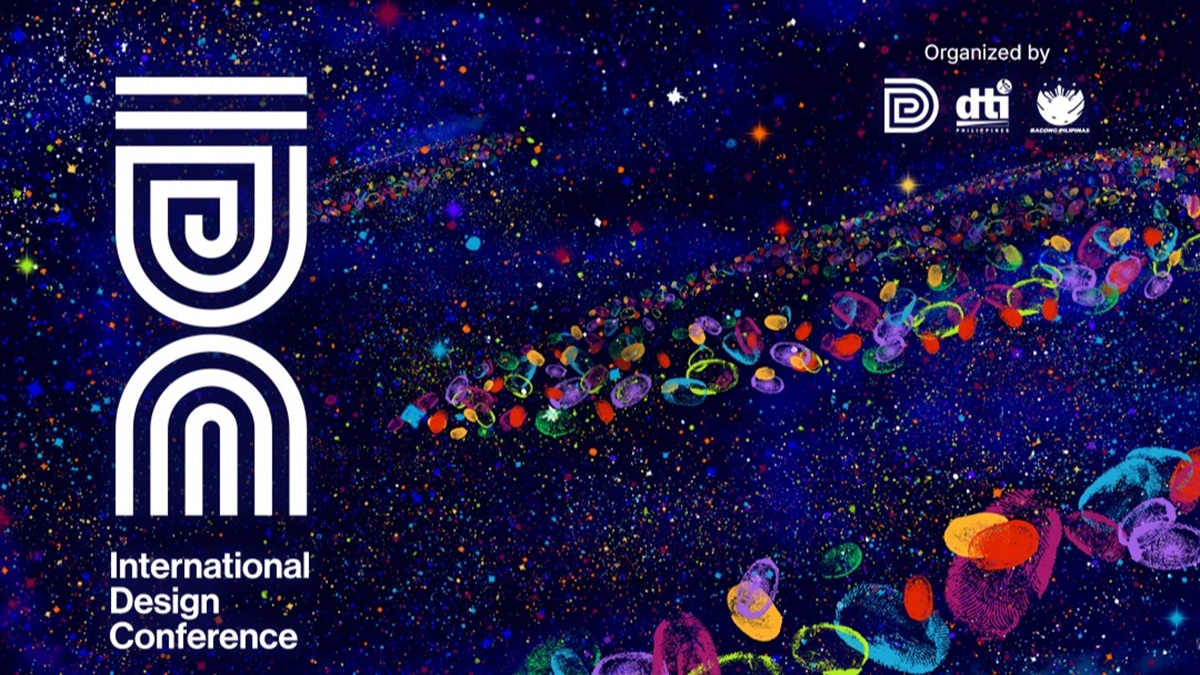
IDC 2026 brings together leading international and Filipino voices to explore how design can help shape a world where many worlds fit.
The Design Center of the Philippines marks a decade of the International Design Conference (IDC) with its 10th edition on 18 September 2026 at the Foro de Intramuros, City of Manila, bringing together leading voices from the Philippines and around the world to explore how design can respond to the complexity, diversity, and interconnectedness of the world we live in.

This year’s conference theme, “Designing for the Pluriverse,” draws inspiration from the work of Colombian-American anthropologist and design scholar Arturo Escobar and his view of design as a world-making practice. What people create shapes how they live and relate to one another, while the worlds they create, in turn, shape them.
Through the lens of archipelagic thinking and grounded in the principles of pluralism, justice, and care for the Earth, IDC 2026 asks how design can create space for different ways of knowing, living, and creating to coexist.
“Designing for the Pluriverse” also invites participants to become better weavers and repairers of the mesh of life, recognizing where relationships between people, communities, and places have been weakened or broken.
Because design is more than simply making things. It shapes relationships, environments, and worlds—and with that comes a responsibility for what our acts of making create.
Seeing Design Through an Archipelagic Lens
For the Philippines, this perspective carries particular resonance.
As an archipelago, the country is geographically fragmented, yet its islands remain deeply connected through the waters, movements, exchanges, and relationships that link them. Archipelagic thinking offers another way of understanding the world: as a collection of distinct places that remain connected and in relation to one another, without requiring a single center or dominant perspective.
This approach encourages a broader understanding of design—one that recognizes multiple experiences, cultures, knowledge systems, and ways of living rather than seeking to impose a singular worldview.
Three Distinguished Keynote Voices
IDC 2026 will feature three distinguished keynote speakers—Dr. Jefa Greenaway, Dr. Tita Larasati, and Dr. Grace Nono—alongside Filipino presenters representing diverse fields of design and creative practice.
Dr. Jefa Greenaway, an Indigenous Australian architect and founding director of Greenaway Architects, is recognized for integrating Aboriginal knowledge systems and cultural perspectives into architecture and the built environment. His practice explores how design can engage with culture, identity, Country, and Indigenous ways of knowing.
Dr. Tita Larasati, an Indonesian industrial designer and educator at the Bandung Institute of Technology, brings extensive experience in sustainable design, material innovation, and design education. Her work examines how design can respond meaningfully to local contexts, resources, and communities.
Dr. Grace Nono, a Filipino ethnomusicologist, Philippine music performing artist, and President of the Tao Foundation for Culture & Arts, brings a scholarly and practice-based perspective rooted in Philippine cultural knowledge and traditions. With a Ph.D. in Ethnomusicology, her work engages with Indigenous knowledge, music, and culture, as well as the ways these can contribute to a deeper understanding of Philippine identity and experience.
Together, the keynote speakers and Filipino presenters will bring different disciplines, contexts, and ways of knowing into conversation. Their discussions will explore how people shape the world through design, how the worlds they create shape them in return, and the responsibility that comes with that relationship.
From Ideas to Participation
Beyond the talks and discussions, IDC 2026 will feature participatory activations throughout the day, allowing attendees to experience and engage with the conference ideas more directly.
Through reflection, making, and exchange, participants will be invited to translate the concepts explored during the conference into more tangible experiences and deepen their understanding of what it means to design for a pluriverse.
A Decade of Expanding the Design Conversation
“For ten years, the International Design Conference has created a space for ideas, practices, and perspectives that are not in the usual design discussions,” said Rhea Matute, Executive Director of the Design Center of the Philippines.
“This year, true to our positioning as a thought-leadership event, we are asking a bigger question: what becomes possible when we recognize that there is more than one way to understand the world, and more than one way to design its future?”
Matute added that “Designing for the Pluriverse” reflects the Design Center’s belief that the diversity of people, cultures, and knowledge systems is not something to design around, but something that can be designed with.
“And because design shapes relationships and worlds, it also asks us to take responsibility for what we create and for what we may need to repair,” she said.
Free and Open to the Public
The 10th International Design Conference is free and open to the public, giving designers, creative practitioners, students, educators, industry professionals, and anyone interested in design an opportunity to take part in the decade-long platform for dialogue and exchange.
Interested participants may register and find more information through https://bit.ly/joinidc2026.

Scan to register