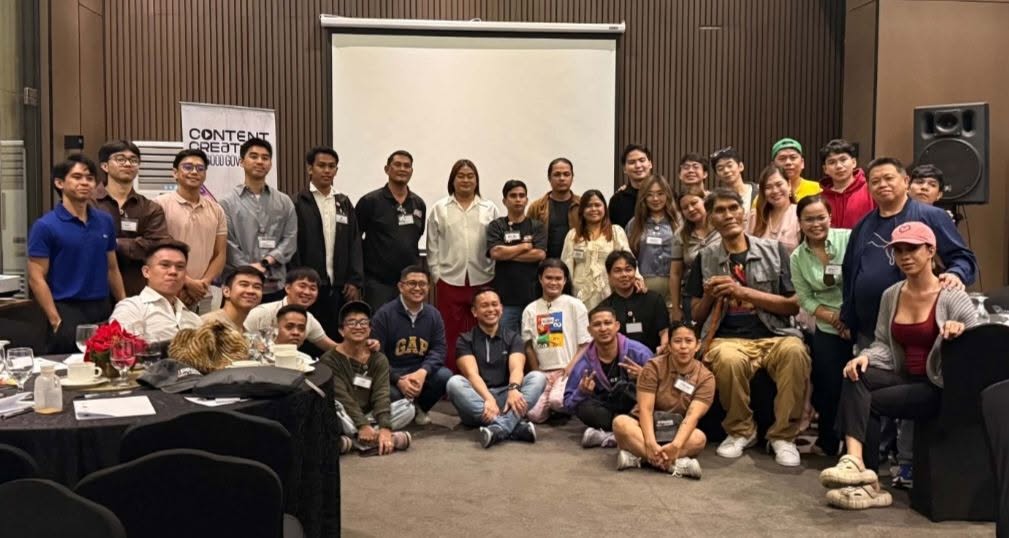
As digital platforms continued to shape public opinion and influence conversations about governance, the role of content creators in promoting responsible citizenship, transparency, and accountability took center stage during the Content Creators Summit for Good Governance, held on November 14, 2026, at the BAQ Room, B Hotel Alabang.
Running from 1:00 PM to 6:00 PM, the summit carried the banner “For Good Gov,” highlighting the growing intersection between digital content creation and public service.
The gathering underscored the potential of online creators to contribute to meaningful discussions about governance and nation-building, particularly as social media had become one of the primary channels through which Filipinos accessed information and engaged in public conversations.
Content creators had increasingly become influential voices in shaping public narratives. Their platforms offered opportunities to make government programs more accessible, explain public policies, raise awareness of community concerns, and encourage citizens to participate in democratic processes.
However, the summit’s central message also pointed to an important responsibility: digital influence must be accompanied by credibility, accuracy, and ethical communication.
With misinformation capable of spreading rapidly across social media, creators were reminded of the importance of fact-checking, responsible commentary, and distinguishing verified information from speculation.
THE PROFILER’S POINT OF VIEW
The summit highlighted an important reality: good governance was never the exclusive responsibility of government institutions. It also depended on an informed, engaged, and discerning citizenry.
In this evolving media landscape, content creators emerged as potential partners in strengthening public awareness and accountability. However, their credibility depended on accuracy, independence, and commitment to truth—not merely on popularity, viral engagement, or political affiliations.
The greater challenge was transforming digital influence into meaningful civic participation.
Having millions of followers could provide considerable reach, but the more important question remained: Did that influence contribute to an informed public?
Ultimately, the real measure of influence was not simply the number of views, likes, or shares generated, but the value of the information and conversations brought into society.
Because good governance needed more than good content. It needed responsible voices, informed citizens, and a genuine commitment to the public good