One of the country’s longest-established banks adds to a local funding base Billease is deliberately building, as Philippine banks and fintech lenders increasingly work as partners rather than competitors.
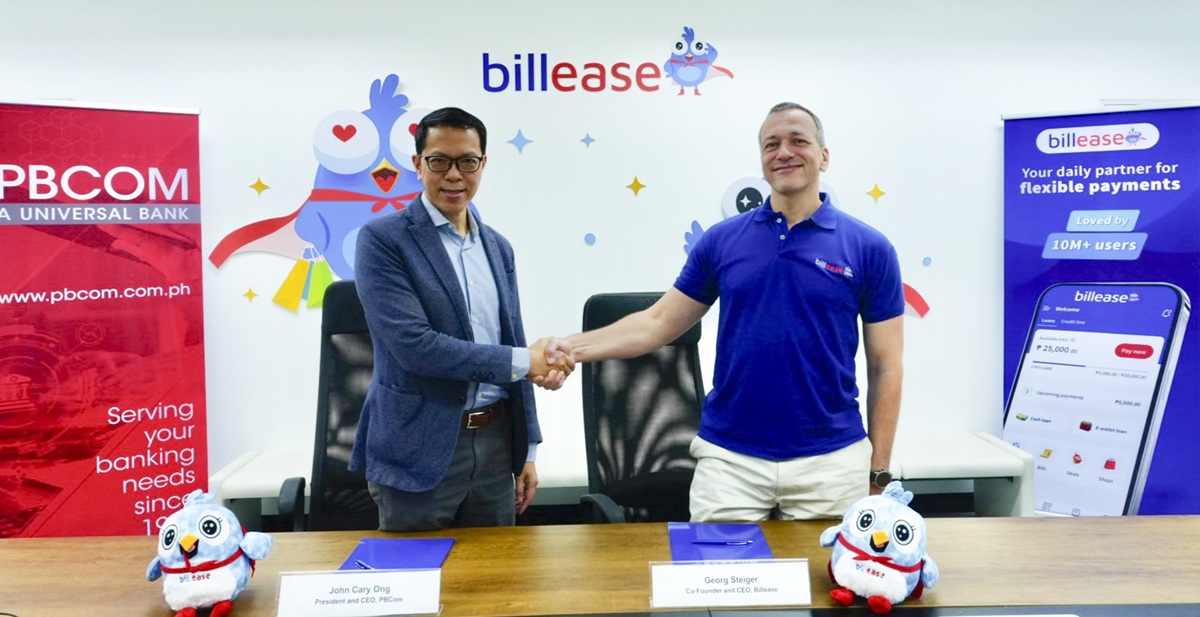
Billease, one of the Philippines’ leading consumer finance and buy-now-pay-later platforms, has signed a ₱500-million credit facility with the Philippine Bank of Communications (PBCOM), further strengthening its local banking partnerships and funding capacity.
PBCOM joins Rizal Commercial Banking Corporation (RCBC) and Philippine National Bank (PNB) among the Philippine banks providing financing to Billease, continuing the company’s series of local bank credit facilities secured this year.
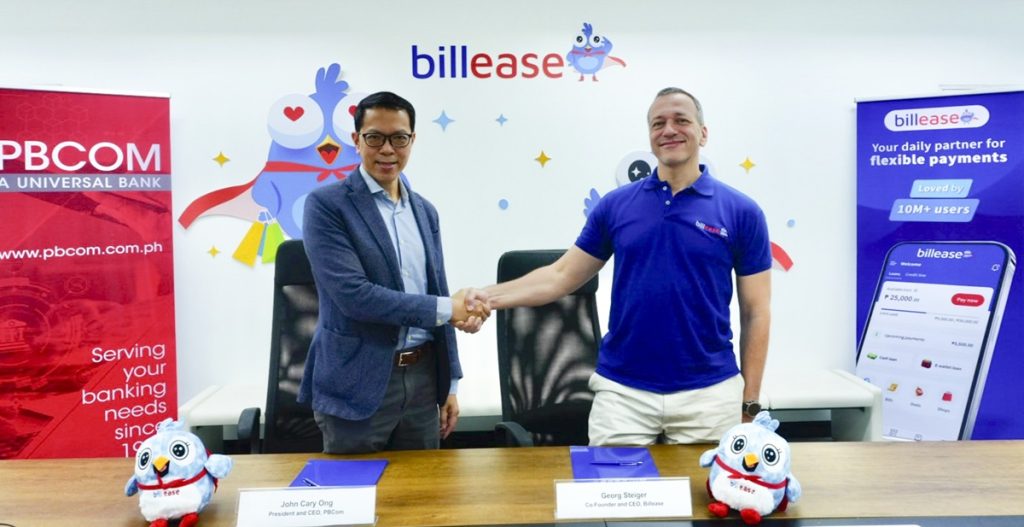
The agreement was signed in Manila by Georg Steiger, co-founder and CEO of Billease, and John Cary Ong, President and CEO of PBCOM.
Making retail credit bankable
Founded in 1939, PBCOM is one of the Philippines’ longest-established banks and operates today as a universal bank. Reaching retail consumers at scale can be challenging for traditional banks, as it involves managing millions of small, short-term loans, often extended to borrowers with limited or no credit history.
Billease helps make this segment accessible to bank financing by turning consumer lending into an exposure that financial institutions can assess and underwrite. Similar to its facilities with RCBC and PNB, the PBCOM facility is secured by a pool of Billease consumer loans registered through the Philippines’ Personal Property Security Registry.
The loan pool is over-collateralized and regularly replenished with performing loans. This gives PBCOM a first-ranking claim over a granular and diversified portfolio instead of concentrating its exposure on a handful of large borrowers.
Banks and fintechs, increasingly on the same side
Billease originates, underwrites and services consumer loans, including those extended to customers with thin or no credit histories. Through partnerships with banks, the company gains an additional source of capital to support its lending operations, allowing both institutions to contribute their respective strengths and help more Filipinos access affordable, transparent credit.
“A few years ago, banks and fintech lenders were mostly seen as competitors. That is changing. Banks have the capital and want retail exposure, and we have the origination, underwriting and collections to deploy it responsibly. What lets a bank say yes is evidence. We now have several years of audited results and loan performance that a bank can test for itself. PBCOM did that work, and we are glad to have them with us,” said Garret Go, Chief Financial Officer of Billease.
“For more than eight decades, PBCOM has grown alongside Filipino businesses and households. This facility enables us to extend our support to the unbanked or underbanked Filipino consumers in a prudent and sound manner, by working with a trusted partner with a strong track record and a good reputation. It reflects our commitment to responsible lending and to widening access to finance for more Filipinos,” said John Cary Ong, President and CEO of Philippine Bank of Communications.
A broader local funding base, from a conservative balance sheet
Local bank financing has become an increasingly important component of Billease’s funding strategy, providing peso-denominated capital to support its peso-based loan portfolio. Together with equity and international lending sources, local bank facilities help diversify the company’s funding base and deepen its relationships with Philippine financial institutions. Billease’s entry into banking through its rural bank is also expected to further expand its funding options over time.
The company supports its growth with a strong balance sheet. In FY2025, Billease increased revenue by more than 80% to ₱8.7 billion, generated approximately ₱1.2 billion in EBITDA, and posted a net profit of ₱782 million, marking its third consecutive year of profitability.
Its gross loan book also expanded by more than 77% to approximately ₱12.5 billion. As of December 31, 2025, Billease reported total equity of approximately ₱6.4 billion against total borrowings of ₱7.1 billion, equivalent to a debt-to-equity ratio of roughly 1:1. This leaves the company with ample headroom to take on additional well-secured local debt.
Supporting households and local businesses
The funding also supports the merchants and businesses that Billease serves. Through Billease Deals, which is now accessible online at deals.billease.ph, merchants can offer their products to millions of pre-approved Billease customers without paying platform commissions, listing fees or payment markups.
Merchants can channel these savings into offers such as 0% down payment and zero-interest installment options, while customers can spread their payments over time using their existing Billease credit limit.
With households keeping a closer watch on their spending and businesses facing mounting pressures, Billease Deals aims to make purchases more affordable for consumers while helping merchants sustain sales.
“Each bank that comes on board makes our funding broader and more resilient. It also says something about where the market is going: established Philippine banks are ready to fund consumer lending when it is done with discipline and transparency. In a tougher economy, that funding goes straight back to Filipino households and the local businesses they buy from. We would welcome more banks into that conversation,” said Georg Steiger, co-founder and CEO of Billease.